Installing a dishwasher air gap might seem hard at first. But it is easier than you think. This guide will help you install an air gap to your garbage disposal. We will use simple words and clear steps.
What Is a Dishwasher Air Gap?
An air gap is a small device that stops dirty water from flowing back into your dishwasher. It keeps your dishwasher clean and safe. Without an air gap, dirty water can go back into your dishwasher. This can cause bad smells and health problems.
The air gap sits on your kitchen sink or countertop. It connects to your dishwasher and your garbage disposal. When you run the dishwasher, water goes through the air gap. If there is a blockage, the air gap stops dirty water from coming back.
:max_bytes(150000):strip_icc()/dishwasher-drain-hose-connections-2718613-02-f4a5db3ab362455fb034f98b18198c6b.jpg)
Credit: www.thespruce.com
Why Do You Need an Air Gap?
- Prevents contamination: Stops dirty water from going back into dishwasher.
- Meets building codes: Many places require air gaps by law.
- Protects your dishwasher: Helps avoid damage caused by dirty water.
- Improves dishwasher cleaning: Keeps water clean for better washing.
Tools and Materials Needed
Before you start, gather these items:
- Dishwasher air gap kit (usually includes air gap and hoses)
- Screwdriver (flat or Phillips head)
- Adjustable wrench or pliers
- Drill with a hole saw (if no hole on sink)
- Bucket or towel (to catch water)
- Utility knife or scissors (to cut hoses)
Step 1: Turn Off Power and Water
Safety first. Turn off power to your garbage disposal. You can do this at your home’s circuit breaker. Also, turn off the water supply under your sink. This will stop leaks and accidents.
Step 2: Check for Air Gap Hole
Look at your sink or countertop. Most sinks have a small hole for the air gap. If your sink has one, great! If not, you will need to drill a hole.
To drill a hole:
- Measure and mark a spot near the faucet.
- Use a drill with the right hole saw size (usually 1.25 inches).
- Drill carefully to avoid damage.
Step 3: Install the Air Gap
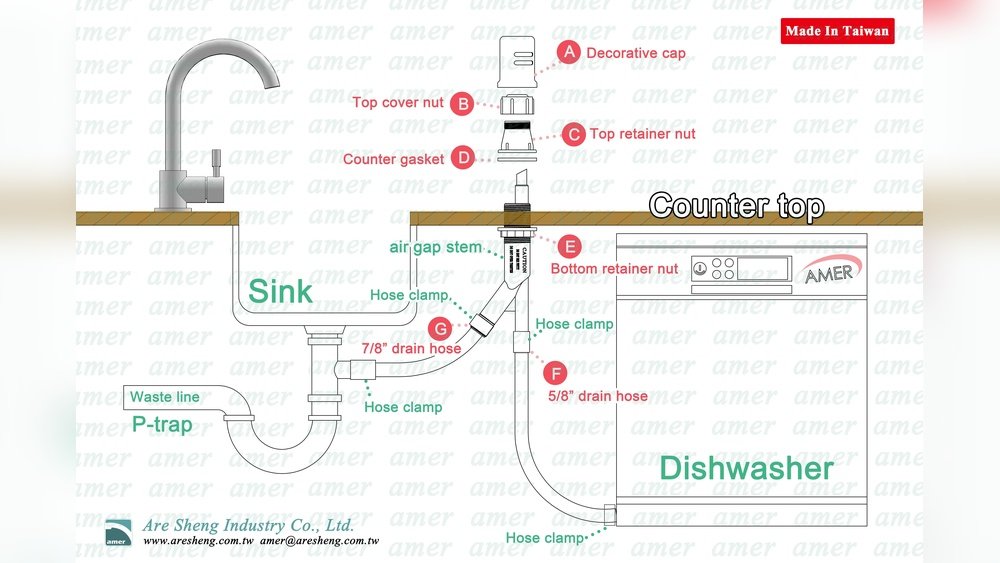
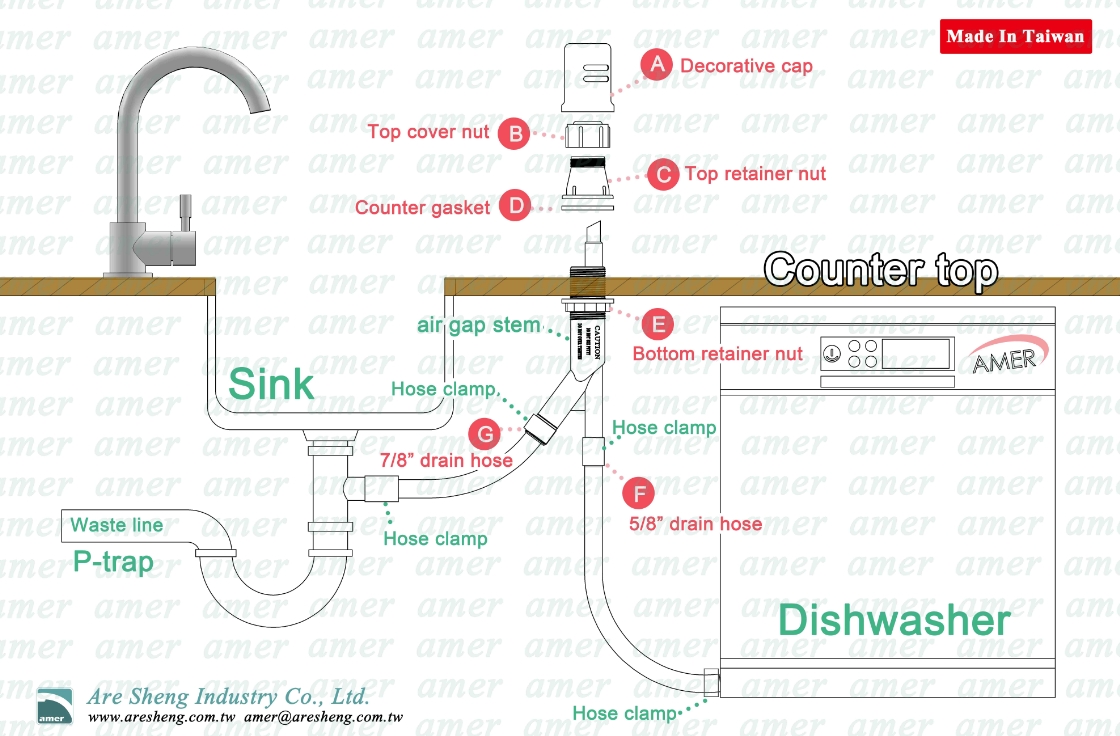
Place the air gap into the hole on the sink or countertop. From above, push the air gap through the hole.
Under the sink, slide the washer and nut onto the air gap’s threaded shank. Tighten the nut by hand, then use pliers to secure it firmly. Do not over-tighten to avoid damage.
Step 4: Connect the Dishwasher Drain Hose
Take the dishwasher drain hose. This hose runs from the dishwasher to the air gap.
Attach one end of the hose to the dishwasher’s drain outlet. Use a hose clamp to secure it tight. Then, connect the other end of this hose to the smaller inlet on the air gap (usually marked “Dishwasher”).
Again, use a hose clamp to keep it tight. Check that the hose is not bent or kinked.
Credit: www.aresheng.com.tw
Step 5: Connect the Air Gap to Garbage Disposal
Now, take the second hose from the air gap’s larger outlet (usually marked “Waste”).
Attach this hose to the garbage disposal’s dishwasher inlet. This is a small tube on the disposal unit.
If your garbage disposal does not have an inlet, you need to install a knockout plug first. Use a screwdriver to remove the plug carefully.
Secure the hose with a clamp. Make sure the connection is tight and the hose runs freely.
Step 6: Check All Connections
Look at all hose connections. Make sure all clamps are tight. No hose should be bent sharply.
Check that the air gap is firmly mounted on the sink. It should not move when you touch it.
Step 7: Turn On Water and Power
Turn the water supply back on. Then, restore power to the garbage disposal from your breaker.
Step 8: Test the Installation
Run the dishwasher for a short cycle. Watch the air gap closely.
Water should flow smoothly from the dishwasher, through the air gap, and into the garbage disposal. There should be no leaks or water coming out of the air gap.
Troubleshooting Tips
- Water leaks: Tighten hose clamps and nut under air gap.
- Water backs up: Check if garbage disposal inlet is clogged.
- Air gap overflows: Clean the air gap with a brush and water.
- Hose damage: Replace any cracked or worn hoses.
Air Gap Maintenance
Keep the air gap clean. Wipe it with a damp cloth regularly.
If water flows slowly, clean inside the air gap with a small brush. This stops blockages.
Check hoses yearly. Replace if they look old or damaged.
Benefits of Installing an Air Gap
| Benefit | Explanation |
|---|---|
| Prevents Backflow | Stops dirty water from entering dishwasher. |
| Health Safety | Reduces risk of bacteria and mold growth. |
| Legal Requirement | Meets plumbing codes in many areas. |
| Protects Dishwasher | Prevents damage from dirty or contaminated water. |
| Easy Maintenance | Simple to clean and check for blockages. |
Frequently Asked Questions
What Is The Purpose Of A Dishwasher Air Gap?
A dishwasher air gap stops dirty water from flowing back into your dishwasher. It keeps the water clean and safe. This helps avoid bad smells and clogs.
How Do I Connect The Air Gap To The Garbage Disposal?
Attach one hose from the dishwasher to the air gap. Connect another hose from the air gap to the garbage disposal. Secure both hoses tightly to avoid leaks.
Can I Install An Air Gap Without A Garbage Disposal?
Yes, you can install an air gap without a garbage disposal. The air gap still prevents dirty water from flowing back. It connects directly to the drain pipe.
What Tools Do I Need To Install An Air Gap?
You will need a screwdriver, pliers, and a drill for holes. Also, have hoses and clamps ready for connections. These tools help ensure a secure fit.
Conclusion
Installing a dishwasher air gap to your garbage disposal is simple. It helps keep your dishwasher clean and safe. Follow these easy steps carefully. Use the right tools and materials. Take your time and check all connections.
This small device can protect your home and health. It stops dirty water from flowing back. It also meets plumbing codes in many places.
If you have questions, ask a plumber or a hardware store worker. They can help you choose the right parts. Remember, safety comes first. Always turn off power and water before starting.
With a little work, your dishwasher will work better and last longer. The air gap is a smart addition to your kitchen plumbing.