Pure well water is a treasure for many homeowners. It often tastes fresher than city water and doesn’t contain chlorine or other chemicals used in municipal systems. Yet, well water can contain hidden dangers—like bacteria, heavy metals, pesticides, and sediment. That’s why choosing the best under sink water filter is so important if you rely on a well. With the right filter, you get water that’s not just clear, but truly safe and delicious. This guide walks you through everything you need to know, from how well water differs from city water, to what makes under sink filters so effective, and which models are best for your home. Whether you’re new to well water or looking to upgrade your system, you’ll find answers and confident guidance here.
Why Well Water Needs Special Filtration
Well water comes straight from the ground. Unlike city water, it isn’t treated at a plant. This means it often contains natural minerals, but it can also have contaminants you don’t want to drink. Even if your well is deep and protected, rain, farming, and old pipes can all introduce unwanted substances.
Common well water contaminants include:
- Sediment: Tiny bits of sand, dirt, or rust that make water cloudy or gritty.
- Iron and manganese: These metals can give water a metallic taste and stain sinks and clothes.
- Hardness minerals: Calcium and magnesium cause scale buildup.
- Bacteria and viruses: Especially risky after flooding or if the well is shallow.
- Nitrates and pesticides: Often from agricultural runoff.
- Heavy metals: Like arsenic or lead, sometimes present due to the local geology.
Municipal water is tested and treated regularly. Well owners are responsible for their own water safety. For this reason, a robust filtration system under your sink can give peace of mind every time you turn on the tap.
What Makes Under Sink Filters Ideal For Well Water
Why choose an under sink water filter instead of a pitcher, faucet attachment, or whole-house system? There are several clear advantages, especially for well water:
- Direct filtration at the point of use: Ensures the water you drink and cook with is the cleanest.
- High filtration capacity: Handles higher loads of contaminants than most pitchers or faucet filters.
- Convenient and space-saving: Fits under the kitchen sink, out of sight.
- Customizable: Many models let you choose cartridges or add extra stages for specific contaminants.
- Cost-effective: Usually less expensive than a whole-house system, while still providing excellent protection.
One important insight: some well owners think a whole-house filter is enough. But these often focus on sediment and hardness, not removing bacteria or chemicals. An under sink system is your last line of defense for drinking water.

Credit: www.amazon.com
Key Features To Look For In An Under Sink Water Filter For Well Water
Not all under sink water filters are the same. When you’re choosing for well water, pay close attention to these features:
1. Filtration Stages
Well water often needs multi-stage filtration. Here’s why:
- Sediment filter: Removes sand, rust, and dirt that can clog pipes and damage appliances.
- Carbon filter: Reduces chlorine taste (if present) and absorbs pesticides, herbicides, and some chemicals.
- Heavy metal filter: Special media like KDF or activated alumina can target lead, mercury, or arsenic.
- Reverse osmosis (RO): For the highest level of purification, an RO membrane removes up to 99% of many contaminants.
- UV sterilizer: Optional, but kills bacteria and viruses—especially important for shallow or untested wells.
2. Filter Life And Maintenance
Longer filter life means less hassle and lower cost. Look for systems where cartridges last 6-12 months or longer. Always check how easy it is to change filters—some require tools, others are twist-and-lock.
3. Flow Rate
A good under sink filter should provide at least 0.5–2 gallons per minute (GPM). Too slow, and you’ll be frustrated waiting for a glass of water.
4. Certification
Look for NSF/ANSI certifications. These prove the system has been tested to remove specific contaminants. For example, NSF 53 covers health-related contaminants, while NSF 42 focuses on taste and odor.
5. Specific Contaminant Removal
Your well water might have unique problems. Test your water, then choose a system designed to remove what’s actually present—don’t rely on generic marketing claims.
6. Installation And Size
Measure your under-sink space. Some systems are compact, while others are bulky and require room for tanks or extra cartridges.
7. Price And Ongoing Costs
Factor in both the upfront price and the cost of replacement filters. Sometimes, a pricier system is cheaper over time due to longer filter life.
How Under Sink Water Filters Compare: Main Types
There are three main types of under sink water filters used with wells. Understanding the differences helps you match the right system to your needs.
| Type | Main Strength | Best For | Limitations |
|---|---|---|---|
| Standard Multi-Stage | Removes sediment, chlorine, basic chemicals | Moderately clean well water | May not remove all heavy metals or microbes |
| Reverse Osmosis (RO) | Removes up to 99% of contaminants, including heavy metals and microbes | High-risk or unknown well water | Wastes some water, slower flow, removes beneficial minerals |
| Ultraviolet (UV) Add-On | Kills bacteria and viruses | Wells with microbial risk | Does not remove chemicals or sediment |
If your well has tested positive for bacteria, a system with UV sterilization or a reverse osmosis membrane is often essential.

Credit: www.nytimes.com
Top 7 Under Sink Water Filters For Pure Well Water
Here are the top choices for under sink filters that work well with most private wells. Each has unique strengths for different well water situations.
1. Apec Roes-50 Reverse Osmosis System
This classic five-stage RO system is a favorite for well owners. It removes up to 99% of arsenic, lead, bacteria, fluoride, and more. The high-capacity filters last 6–12 months, and the system is NSF certified. There’s a dedicated faucet included for pure water. The only downside: it wastes about 3 gallons for every gallon purified, but for most well users, the clean water payoff is worth it.
2. Home Master Tmhp Hydroperfection
If you want a system that does it all, the TMHP is hard to beat. It combines reverse osmosis, UV sterilization, and remineralization. That means it filters out heavy metals, kills bacteria, and puts healthy minerals back in the water. Filter changes are simple and only needed once a year for most homes. It’s ideal if your well water has both chemical and microbial contamination.
3. Ispring Rcc7ak 6-stage Ro System
This model offers six stages, including an alkaline remineralization filter. It’s great if you dislike the flat taste of pure RO water. It removes up to 98% of iron, lead, and other contaminants, plus adds calcium and magnesium back in. With a transparent first-stage housing, you can see when sediment builds up—a small but handy feature.
4. Aquasana 3-stage Max Flow
For homes with less severe contamination, this multi-stage carbon system is a strong choice. It removes up to 97% of chlorine, heavy metals, pesticides, and more, but doesn’t use RO. Flow rate is high (up to 0.72 GPM), and filters last six months. It’s NSF certified and easy to install, making it a practical choice for busy families.
5. Cuzn Uc-200 Under Counter Water Filter
If you want simplicity and long life, the CuZn UC-200 is unique. It uses a combination of KDF-55, catalytic carbon, and micro-sediment membranes. It targets chlorine, heavy metals, and bacteria, and lasts up to five years (50,000 gallons). However, it’s not suitable for water with high sediment or microbial loads. It’s best for wells that are already quite clean but need polishing.
6. Express Water Ro5dx 5-stage Ro System
This budget-friendly reverse osmosis system offers five stages and removes up to 99% of contaminants. It’s easy to install and comes with extra filters, reducing maintenance costs. The pure water tank ensures steady flow, but like most RO systems, it wastes some water.
It’s a solid pick for smaller homes or renters.
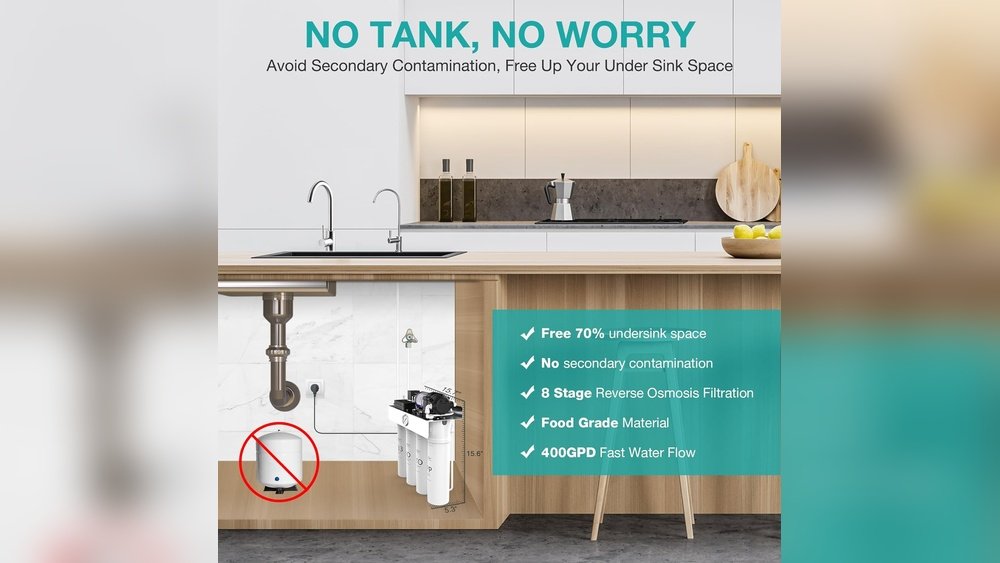
7. Waterdrop G3p800 Tankless Ro System
A more modern, tankless RO system, the G3P800 offers a slim design and smart faucet with TDS monitoring. It purifies up to 800 gallons per day and wastes much less water than older RO systems. The filters are easy to swap, and the compact size fits small spaces. It’s pricier but very efficient—great for tech-savvy homeowners.
Side-by-side Comparison Of Top Models
To make your decision easier, here’s a quick side-by-side look at the key specs of these leading filters:
| Model | Type | Main Strength | Filter Life | Removes Bacteria? | Approx. Price |
|---|---|---|---|---|---|
| APEC ROES-50 | RO | Heavy metals, broad spectrum | 6–12 months | Yes (with RO membrane) | $200–$250 |
| Home Master TMHP | RO + UV | Bacteria, metals, remineralization | 12 months | Yes (with UV and RO) | $350–$400 |
| iSpring RCC7AK | RO + Alkaline | Remineralization, broad spectrum | 6–12 months | Yes (with RO membrane) | $180–$220 |
| Aquasana Max Flow | Carbon | Chlorine, heavy metals | 6 months | No | $150–$180 |
| CuZn UC-200 | KDF/Carbon | Long life, simplicity | 5 years | No | $130–$150 |
| Express Water RO5DX | RO | Budget-friendly, broad spectrum | 6 months | Yes (with RO membrane) | $140–$180 |
| Waterdrop G3P800 | Tankless RO | High capacity, low waste | 6–12 months | Yes (with RO membrane) | $500–$600 |
Choosing The Right Filter For Your Well
With so many choices, how do you pick the best under sink filter for your well water? Here’s a step-by-step approach:
1. Test Your Water
Don’t guess—test your well water for bacteria, lead, iron, hardness, and pesticides. Many local agencies or labs offer affordable testing. This tells you exactly what you need to remove.
2. Match The Filter To Your Needs
- If you have bacteria or viruses: Choose a system with UV sterilization or reverse osmosis.
- If you have heavy metals: RO or a system with a dedicated heavy metal filter is best.
- If you mainly have sediment or taste issues: A quality carbon and sediment filter may be enough.
- If you dislike flat-tasting water: Look for models with remineralization stages.
3. Think About Maintenance
Some systems have filters that last a year or more, while others need changing every six months. Consider how much time and money you want to spend on upkeep.
4. Consider Installation
DIY-friendly systems come with everything you need and clear instructions. If you’re not handy, check if professional installation is available.
5. Don’t Forget Certification
Look for NSF certification to ensure the filter removes what it claims. This is more reliable than marketing promises.
6. Keep Futureproofing In Mind
Your well water can change over time. Choose a system that can be upgraded or added to, like adding a UV stage or swapping filter cartridges.
Common Mistakes Well Owners Make (and How To Avoid Them)
Many people new to well water make similar mistakes. Here are a few, and how you can avoid them:
- Not testing water regularly: Well water quality can change, especially after heavy rain or drought. Test at least once a year.
- Ignoring sediment: Even if your water looks clear, fine particles can damage filters and pipes. A good sediment filter is essential.
- Assuming one filter does it all: Some systems are great for chemicals but won’t stop bacteria. Layering filtration stages is usually best.
- Skipping maintenance: Old filters lose effectiveness and can even become a source of bacteria. Set reminders to change them on time.
- Focusing only on price: A cheaper system may cost more long-term if filters need frequent replacement or don’t remove all contaminants.
Real-world Example: Solving Iron And Bacteria Problems
Consider a rural homeowner whose well water had a metallic taste and orange stains in the sink—classic signs of iron contamination. Lab tests also found coliform bacteria. Their solution:
- First, install a sediment pre-filter to catch rust and dirt.
- Next, use a reverse osmosis system with a UV stage. This removed the iron, killed bacteria, and made the water taste clean.
- Finally, they added a remineralization filter so the water wasn’t too acidic or flat.
After installation, stains disappeared, water tasted better, and the family saved money by not buying bottled water. This shows how combining filter types can solve even tough well water problems.
Pro Tips For Getting The Most From Your Under Sink Filter
- Flush new filters well: Always run water for several minutes after installing a new filter to clear out carbon dust or residue.
- Label filter change dates: Stick a note under your sink with the date you last changed filters.
- Check for leaks monthly: Even a small leak can cause big problems over time.
- Install a pressure gauge: Some filters clog quickly in high-sediment wells. A gauge helps you spot pressure drops early.
- Save your test results: Keep a file or photo record of your well water tests so you can track changes over the years.

Credit: www.youtube.com
When To Replace Your Under Sink Water Filter
Knowing when to change your filter is critical. Here are some signs it’s time:
- Water flow slows down noticeably.
- Taste or odor returns.
- Filter housing looks dirty or is hard to flush clean.
- Your filter’s recommended time is up (usually every 6–12 months).
Some advanced systems have indicator lights or TDS meters that tell you when a filter is getting clogged.
Are Under Sink Filters Enough For All Well Water Problems?
For most homes, a high-quality under sink filter is perfect for making drinking and cooking water safe. But there are exceptions:
- Extremely high iron or manganese: May need a whole-house treatment before water reaches the kitchen.
- Heavy sediment: A pre-filter at the wellhead or where water enters the house can protect your under sink system.
- High hardness: If you see white scale on faucets, a water softener may be needed before your under sink filter.
- Severe bacteria contamination: Sometimes, shock chlorination or a UV system at the main line is required first.
If you’re not sure, consult a local water specialist or plumber. And remember, you can read more about water filter types in our post on [best water filter for home use](internal-link-here).
How Under Sink Filters Compare To Other Filtration Methods
To help you see how under sink filters stack up against other options, here’s a quick overview:
| Filtration Method | Best For | Drawbacks |
|---|---|---|
| Under Sink Filter | Drinking and cooking water, high contaminant removal | Does not protect appliances or showers |
| Pitcher Filter | Quick, portable, taste improvement | Low capacity, limited contaminant removal |
| Whole House Filter | Protects all faucets, removes large particles | Usually not designed for bacteria/chemical removal |
| Faucet Mount | Easy to install, basic filtration | Slow flow, short filter life |
Most well owners find that combining a whole-house sediment filter with an under sink RO or multi-stage system gives the best results.
Frequently Asked Questions
What Is The Best Way To Test My Well Water Before Buying A Filter?
The most reliable method is to use a certified laboratory test. Many counties or agricultural extensions offer this service, or you can buy a mail-in test kit. Home test strips are less accurate but can show if you have big problems like iron or bacteria. Always test at least once a year, and whenever you notice changes in taste, smell, or color.
Can Under Sink Filters Remove All Bacteria From Well Water?
Most standard under sink filters do not remove bacteria. To kill or remove bacteria and viruses, look for reverse osmosis systems with a tight membrane, or systems with an added UV sterilizer. If your well tests positive for bacteria, these features are essential for safe water.
How Much Does It Cost To Run An Under Sink Filter For A Year?
Annual costs depend on the system and your water quality. Basic multi-stage carbon systems may cost $60–$100/year for filters. Reverse osmosis systems can cost $80–$150/year for replacement filters. Systems with UV or remineralization stages may be a bit more. Remember, investing in good filters is cheaper than health problems or bottled water.
Will An Under Sink Filter Reduce The Flow Of My Kitchen Faucet?
Most high-quality under sink filters are designed to keep good flow, usually 0.5–2 GPM. RO systems with a tank may flow slightly slower, but for most kitchen uses, it’s not a problem. Tankless RO systems are faster but more expensive. If your flow slows down over time, it usually means it’s time to change the filter.
Where Can I Learn More About Water Filtration Standards?
A great resource for understanding water filter certifications and standards is the NSF International website. You can read about different NSF/ANSI standards and what they mean for your health at NSF International.
A high-quality under sink water filter can turn your well water into pure, safe, and delicious refreshment. By testing your water, matching the right filter to your needs, and maintaining your system, you’ll enjoy worry-free drinking water for years to come.
If you want to dig deeper into water filtration options, check out our article on [best water filter for home use](internal-link-here). Clean water is your right—and with the right filter, it’s within easy reach.