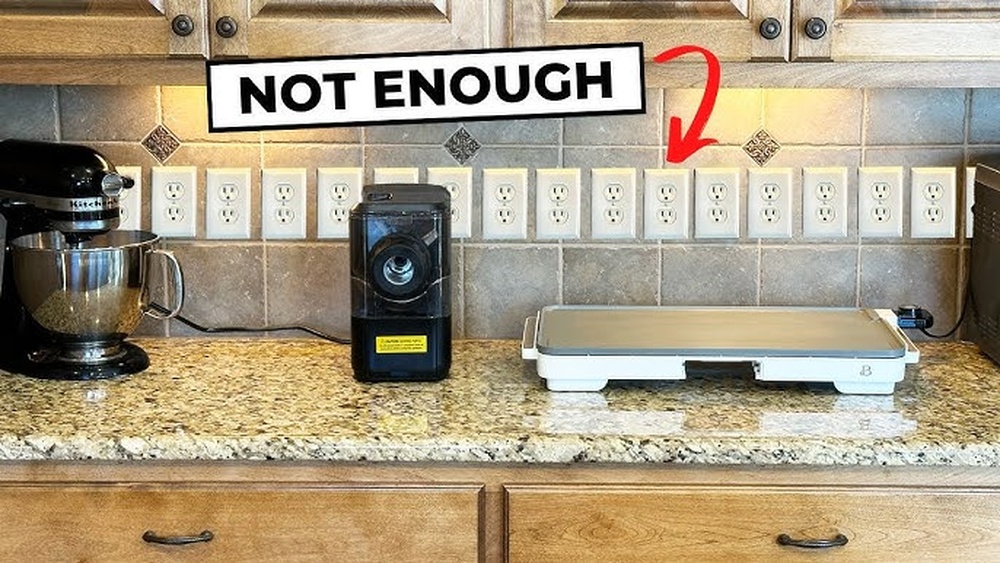
When you’re planning or upgrading your kitchen, one of the most common questions is: How many outlets can you put on a 20 amp circuit in a kitchen? The answer isn’t always simple. It depends on the National Electrical Code (NEC), the types of appliances, safety rules, and practical needs. If you’re a homeowner, contractor, or DIY enthusiast, understanding these rules is essential for both safety and code compliance.
In this guide, you’ll get a detailed, easy-to-understand explanation about 20 amp kitchen circuits. You’ll learn the official rules, see real-life examples, and discover useful tips that even many pros overlook. By the end, you’ll know exactly how to plan your kitchen outlets without risking overload or failing an inspection.
Why 20 Amp Circuits Are Standard In Kitchens
Kitchens use more electricity than most rooms. Toasters, coffee makers, blenders, microwaves, and other small appliances often run at the same time. The NEC requires at least two 20 amp circuits for kitchen countertops, so you have enough power to avoid tripping breakers.
A 20 amp circuit uses thicker wire (12-gauge) and can safely handle more load than a 15 amp circuit. This makes it ideal for the heavy electrical use in a modern kitchen.
Think about a typical morning: you might run a toaster and a coffee maker together while someone else blends a smoothie. Each of these appliances can draw a lot of power. If your kitchen was wired with only 15 amp circuits, you’d be resetting breakers regularly. With 20 amp circuits, you have a higher safety margin and more flexibility for using several devices at once.
Another reason for the 20 amp standard: kitchen layouts have grown larger and appliances have become more powerful in recent years. Even if your kitchen is small, the code applies to everyone, so you’re ready if you ever remodel or sell your home.
Understanding The Nec Requirements
The National Electrical Code (NEC) is the main rulebook for home wiring in the US. According to NEC Article 210.52(B), all kitchen countertop outlets must be supplied by at least two separate 20 amp circuits.
Key points from the code:
- Only kitchen, pantry, breakfast, or dining areas can be on these circuits.
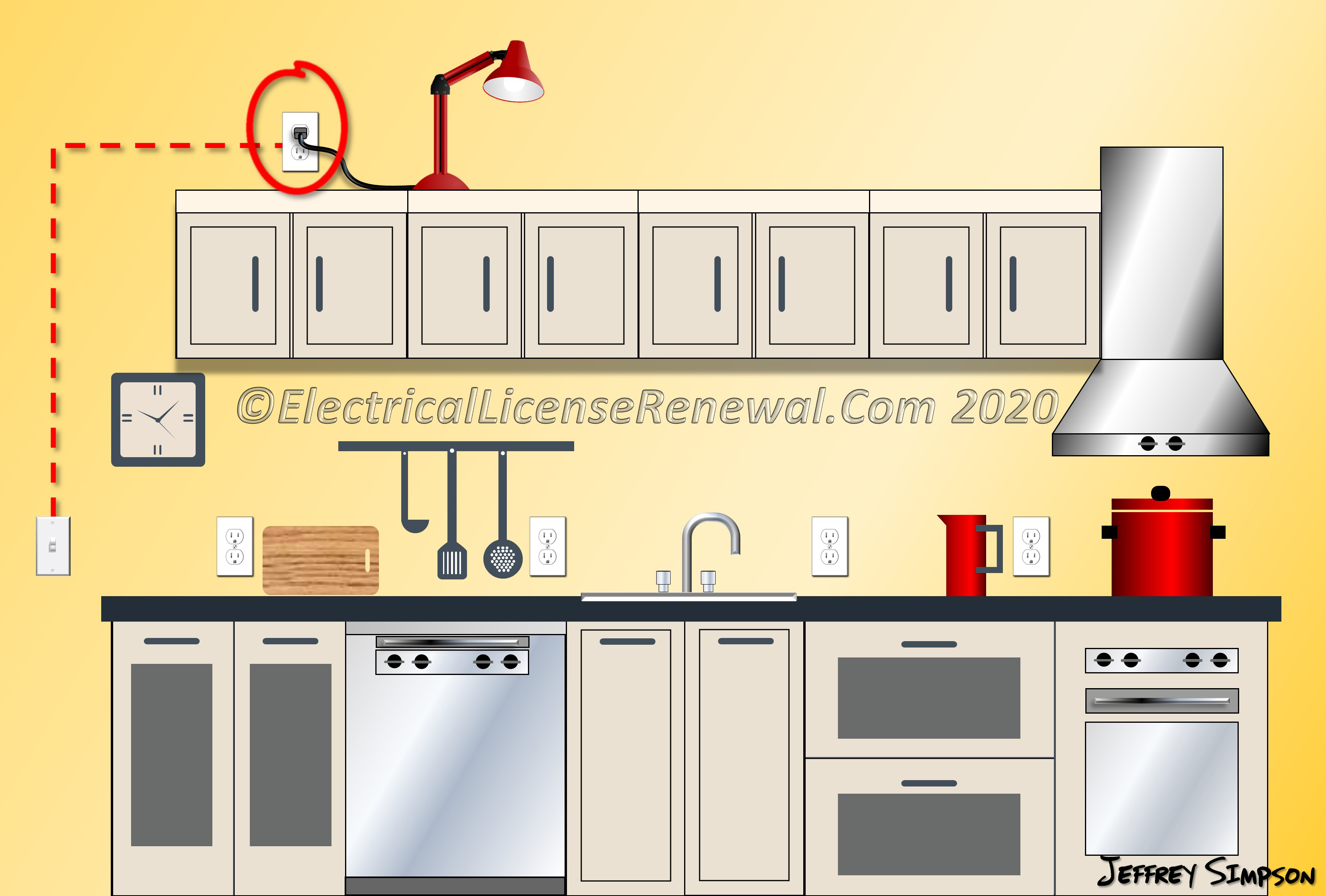
- Each circuit must serve only countertop outlets, not lights or other rooms.
- No single appliance outlet (like a dishwasher) can be on these two required circuits.
- All outlets must be GFCI protected for safety.
The NEC also requires that these circuits serve only the countertop and dining areas, which means you can’t “borrow” them for a living room outlet or a garage plug. This focus on dedicated power reduces the risk of accidental overloads from other parts of the house.
Many homeowners don’t realize: even if you have extra capacity on a kitchen circuit, the code does not allow you to add outlets for lighting or other uses to these dedicated circuits. Inspectors check for this detail, so double-check your plans before wiring.

Credit: www.reddit.com
How Many Outlets On A 20 Amp Circuit In A Kitchen? The 80% Rule
The NEC doesn’t set a strict limit for the number of outlets on a 20 amp kitchen circuit. Instead, it focuses on total load. The most important rule is the 80% rule for continuous load:
- A 20 amp circuit = 20 amps x 120 volts = 2400 watts maximum.
- For safety, only 80% (1920 watts) should be used for continuous loads.
So, the real answer depends on the expected load on the circuit, not just the number of outlets.
This rule is especially important for areas where appliances may be used for more than three hours at a time. For example, if you have a slow cooker or a coffee maker that stays on all morning, you want to be well within the 80% load to avoid tripping breakers or overheating wires.
If you use more than one major appliance at the same time, the load can quickly add up. That’s why the number of outlets is not as important as understanding what will actually be plugged in and used.
Extra tip: If you have a kitchen that regularly hosts parties or big family gatherings, consider the possibility of several devices running at once. Planning circuits for real-life use keeps your kitchen safe and frustration-free.
The Myth Of “10 Outlets Per Circuit”
Many people believe there is a hard limit of 10 outlets per 20 amp circuit. This is a myth. The NEC has no such rule. The number of outlets is based on the total load—how much power you expect to use at once.
Still, for planning, most electricians use 8 to 10 outlets per 20 amp kitchen circuit as a practical guideline. But you may need fewer if you have high-power appliances.
This “10 outlet” myth comes from commercial wiring rules or from older residential guidelines, but it doesn’t apply to modern kitchens. Some kitchens may have 12 or more outlets, but if you plan to use multiple heavy-duty appliances, you’ll want to be more conservative.
For example, if you install 10 outlets but regularly use high-wattage appliances at the same time, you could overload the circuit even with fewer outlets. Always let your real kitchen habits decide the number of outlets and circuits, not old rules of thumb.

Credit: www.reddit.com
20 Key Considerations When Planning Outlets On A 20 Amp Kitchen Circuit
Every kitchen is different. To plan safely and meet code, consider these 20 factors. Each one can affect how many outlets you should install on a single 20 amp circuit.
1. Expected Appliance Load
The most important factor is what you’ll plug in. Toasters, microwaves, and coffee makers can each use 800–1500 watts. If you expect to run several at once, you’ll need to limit the number of outlets per circuit.
Tip: Make a list of your appliances and their wattage. Add up the ones you might use at the same time.
Even less obvious appliances—like air fryers, instant pots, or espresso machines—can draw high current. If you’re a cooking enthusiast, your load calculation might surprise you.
2. Countertop Surface Area
The NEC requires an outlet for every 4 feet of countertop. Large kitchens may need more outlets, which means more circuits.
Non-obvious insight: Don’t forget peninsulas and islands—they count as countertop space and need outlets too.
Many people overlook small sections of countertop, such as those near the stove or beside the refrigerator. Even if the area is narrow, if it is more than 12 inches wide, it needs an outlet according to code.
3. Outlets For Dedicated Appliances
Major appliances (dishwasher, garbage disposal, built-in microwave) must have their own dedicated circuits. Never include these on your general-use 20 amp circuits.
A built-in microwave or wall oven might need its own 20 amp or 30 amp circuit. If you include them by mistake on a small appliance circuit, you’ll quickly exceed safe limits.
4. Small Appliance Circuits
The two required 20 amp circuits must only supply kitchen countertop, pantry, and dining area outlets. No lights, refrigerators, or other rooms.
Example: Don’t use these circuits for under-cabinet lighting or an outdoor outlet.
If you want to add accent lighting or plug-ins for other rooms, run separate wires and circuits. This keeps your kitchen outlets compliant and reduces nuisance breaker trips.
5. Gfci Protection
Every kitchen countertop outlet must be GFCI protected. This is for safety, to prevent shocks from water and spills. You can use GFCI outlets or a GFCI breaker.
A common mistake is to install only one GFCI outlet and daisy-chain the rest. While this is allowed, a single failure or accidental reset can leave multiple outlets unprotected. Consider using multiple GFCIs or a GFCI breaker for extra reliability.
6. Outlet Placement And Spacing
Outlets should be placed so that no point on the countertop is more than 24 inches from an outlet. This usually means outlets every 4 feet or less.
Tip: Place outlets near corners and ends of counters to avoid “dead zones” where you can’t plug in appliances.
Think about where you’ll actually use your appliances. A well-placed outlet behind a coffee station or near a prep area makes your kitchen much more convenient.
7. Local Code Differences
Some cities and states use stricter rules than the NEC. Always check with your local building department before starting work.
Practical example: Some areas require more than two 20 amp circuits in large kitchens.
Local inspectors may also require AFCI protection or restrict the use of shared neutrals, so always confirm before buying materials.
8. Future-proofing
Plan for future needs. You may add more appliances later. Adding a few extra outlets (within load limits) or an extra circuit can prevent headaches.
If you remodel later, extra circuits allow for easy upgrades. You might not need a wine fridge or induction cooktop today, but wiring for them now saves money in the long run.
9. Wire Size And Type
For a 20 amp circuit, use 12-gauge wire. Never use 14-gauge, as it’s only rated for 15 amps.
Non-obvious insight: Using 12/3 wire (with an extra hot wire) can allow for split circuits or easier upgrades later.
Also, make sure the wire insulation is rated for kitchen environments, especially if you have under-cabinet lighting or wires routed near heat sources.
10. Type Of Outlets
Use only outlets rated for 20 amps (marked with a “T” shape). Most countertop outlets are standard 15 amp type, but 20 amp outlets are needed if you have an appliance that requires it.
Some kitchen gadgets, especially commercial-grade blenders or mixers, may require a 20 amp outlet. Check your appliance manuals if you’re unsure.
11. Afci Protection
Many areas now require Arc-Fault Circuit Interrupter (AFCI) protection for kitchen circuits. This adds extra safety against electrical fires.
AFCI breakers are more sensitive and can trip from certain appliances, so test your setup before finalizing the wiring.
12. Circuit Breaker Compatibility
Make sure your panel has enough room for new 20 amp breakers. If not, you may need a subpanel or to upgrade your main panel.
Crowded panels are a common problem in older homes. It’s better to add a subpanel now than to overload your main panel.
13. Circuit Labeling
Clearly label each circuit in your breaker box. This makes repairs and future upgrades much easier and safer.
Consider labeling the actual outlet covers during installation. It’s a simple step that can prevent confusion years later.
14. Shared Neutral Wires
Some older kitchens use a single neutral wire shared between circuits (multi-wire branch circuits). This can be dangerous if not wired correctly and can affect how many outlets you can safely add.
Always check for shared neutrals when replacing or adding circuits. Mistakes can lead to dangerous overloads or lost power in half your kitchen.
15. Appliance Placement
Plan where you’ll use high-power appliances. Try to split them between your two 20 amp circuits so one circuit isn’t overloaded.
Example: Plug the coffee maker into one circuit, and the toaster into another.
For best results, alternate outlets between circuits along the countertop. This way, if two people are cooking at once, each can use a different circuit.
16. Islands And Peninsulas
If your kitchen has an island or peninsula, it usually needs at least one outlet. Some codes require outlets on both ends.
For large islands, consider adding more than one outlet for convenience and code compliance. A hidden pop-up outlet is a popular solution for modern kitchens.
17. Usb And Specialty Outlets
If you want to add USB outlets or specialty charging stations, check their power draw. Some require more current and may need their own circuit.
Some high-speed USB charging outlets can draw as much as 3 amps per port. If you install several, this could impact your load calculations.
18. Outdoor And Garage Outlets
Never connect outdoor or garage outlets to your kitchen’s required 20 amp circuits. They must be on separate circuits for safety and code compliance.
Outdoor outlets also have special weatherproofing and GFCI requirements that are different from indoor kitchen outlets.
19. Circuit Load Balancing
Don’t put all outlets on one circuit. Divide them between your two required 20 amp circuits for balanced load and safety.
An unbalanced load can cause nuisance breaker trips, especially if one side of your kitchen is used more often for cooking.
20. Overload Protection
Install high-quality breakers and test your GFCI outlets regularly. This protects against accidental overloads and hidden wiring problems.
Some GFCI outlets have indicator lights or self-testing features, making it easier to spot issues early.
Example Calculation: Outlets On A 20 Amp Kitchen Circuit
Let’s see a practical example using a typical kitchen setup. Assume you want to install 8 countertop outlets on a 20 amp circuit. Here’s how to check if it’s safe:
- List your major appliances and their wattages:
- Toaster: 1200W
- Coffee Maker: 1000W
- Blender: 300W
- Mixer: 200W
- Maximum safe load for a 20 amp circuit: 1920W (80% of 2400W).
- If you run the toaster and coffee maker at the same time: 1200W + 1000W = 2200W (over the safe limit).
So, even with 8 outlets, using two big appliances together can overload the circuit. This is why it’s important to split outlets and plan based on real use, not just the number of outlets.
If you add a blender or mixer to the mix, the load increases further. Even though you have eight outlets, you should never assume all can be used at full power at the same time. For parties or heavy cooking days, using devices across both circuits keeps your kitchen running smoothly.
Wiring And Circuit Planning: Room-by-room Comparison
Kitchen circuits must be more robust than other rooms. Here’s a comparison for perspective:
| Room | Recommended Circuit Size | Typical Outlets per Circuit | Special Requirements |
|---|---|---|---|
| Kitchen | 20 amp | 6–10 | GFCI, 2 required circuits, no lights |
| Bedroom | 15 amp | 8–12 | AFCI required |
| Living Room | 15 amp | 8–12 | AFCI required |
| Bathroom | 20 amp | 1–2 | GFCI required, dedicated circuit |
Notice that kitchens and bathrooms both require 20 amp circuits, but for different reasons. Kitchens are about handling multiple devices, while bathrooms focus on high-draw appliances like hairdryers, but usually only one or two outlets.
Bedrooms and living rooms allow more outlets because the loads are lighter (lamps, TVs), but AFCI protection is now required for new construction.
Outlet Types And Their Uses In Kitchens
The choice of outlet matters for both safety and usability.
| Outlet Type | Best Use | Special Features |
|---|---|---|
| Standard 15 amp | General small appliances | Most common, fits 15/20 amp plugs |
| 20 amp outlet | High-power appliances | “T” slot, for 20 amp plugs |
| GFCI outlet | All countertop outlets | Shock protection, required by code |
| USB combo outlet | Device charging | Built-in USB ports |
Choosing the right outlet for each location helps you stay safe and makes your kitchen more useful. For high-traffic areas or specialty appliances, consider using commercial-grade outlets for extra durability.
Credit: www.electricallicenserenewal.com
Common Mistakes To Avoid
Even experienced DIYers and electricians sometimes make mistakes when planning kitchen circuits. Here are some of the most common—and how to avoid them:
- Overloading a single circuit by adding too many high-power appliances.
- Sharing circuits with other rooms (against code for required kitchen circuits).
- Using the wrong wire size (always use 12-gauge for 20 amps).
- Forgetting GFCI protection on every countertop outlet.
- Not balancing the load between your two required kitchen circuits.
- Ignoring local codes that may be stricter than the NEC.
- Placing outlets too far apart (no more than 4 feet between outlets).
- Failing to label circuits in the breaker box for future maintenance.
- Skipping AFCI protection where required by local code.
Another mistake is not considering how your family really uses the kitchen. For example, if you host gatherings or have kids using appliances, you might need more circuits or extra outlets in certain areas.
Also, don’t forget to test all GFCI and AFCI devices after installation. Faulty protection devices can leave you exposed to risk without you knowing.
Advanced Tips For Kitchen Circuit Planning
Here are a few advanced, practical tips that can make your kitchen wiring safer and more future-proof:
- Install extra circuits if your kitchen is large or you have many high-power appliances.
- Use deep electrical boxes to allow for easier wiring and future upgrades.
- Plan for under-cabinet lighting on a separate low-voltage or lighting circuit, not your 20 amp appliance circuits.
- Wire for dedicated circuits for microwave, dishwasher, garbage disposal, and refrigerator.
- Install combination GFCI/AFCI breakers for maximum safety.
- Use 12/3 wire for split circuits if you want to maximize flexibility (consult a pro for proper wiring).
If you’re upgrading an older kitchen, consider replacing all outlets with tamper-resistant types, especially if you have young children. Modern tamper-resistant outlets prevent accidental shocks from foreign objects.
For kitchens with smart home features, plan space in your boxes for Wi-Fi switches or other smart devices. These often require extra wiring or deeper boxes.
Real-world Example: Wiring A Medium-size Kitchen
Let’s walk through a sample wiring plan for a typical kitchen with an island:
- Total countertop length (including island): 20 feet
- NEC requires outlets at least every 4 feet: 6 outlets minimum
- 2 required 20 amp small appliance circuits
Planning:
- Divide outlets between the two circuits (3 on each)
- Place one outlet on the island, split from both circuits if possible
- Each circuit can safely support typical small appliances, as long as you avoid running several high-power devices at once on the same circuit
Bonus tip: Label each outlet cover with the circuit number during installation—this helps prevent overloads later.
For even more flexibility, consider installing a third small appliance circuit if your panel has space. This is especially helpful if you often cook with friends or family and need more simultaneous appliance use.
A real-world scenario: One homeowner added a separate circuit just for their espresso machine and toaster oven, which get heavy use every morning. This prevented constant breaker trips and made the kitchen far more convenient.
Safety First: Inspections And Professional Help
Working with electricity is dangerous. Even if you’re experienced, always get your work inspected by a licensed electrician or your local building department. Faulty wiring causes thousands of house fires every year.
Never try to upgrade your kitchen wiring without turning off the main breaker first. If you are unsure, hire a professional.
Also, after installation, test all GFCI and AFCI devices using their built-in test buttons. Some problems only show up after several days of use, so keep an eye out for nuisance tripping or flickering lights.
If you ever smell burning or see sparks, shut off power immediately and call an electrician. Safety should always come first.
Internal And External Resources
If you want to dive deeper into the National Electrical Code, check the latest edition online or ask your local inspector. For more tips on home wiring, see our guide on how to wire kitchen outlets safely.
For official NEC guidelines, the best source is the National Fire Protection Association.
Frequently Asked Questions
How Many Outlets Can You Have On A 20 Amp Kitchen Circuit?
There is no strict limit in the NEC. Most experts recommend 6–10 outlets, but it depends on the expected load. The main rule is not to exceed 80% of the circuit’s rated capacity (1920 watts).
If you have a lot of high-power appliances or plan to use many at once, use fewer outlets per circuit or add an extra circuit for safety.
Can A Refrigerator Be On A 20 Amp Kitchen Circuit?
No, the two required 20 amp kitchen circuits are only for countertop outlets. The refrigerator should be on its own dedicated 15 or 20 amp circuit, separate from the small appliance circuits.
Do All Kitchen Outlets Need To Be Gfci?
Yes, every kitchen countertop outlet must be GFCI protected to prevent electrical shock near water sources.
This includes outlets on kitchen islands, peninsulas, and those within 6 feet of a sink.
What Wire Size Should I Use For A 20 Amp Kitchen Circuit?
Always use 12-gauge wire for a 20 amp circuit. Never use 14-gauge wire, as it’s only rated for 15 amps.
For longer runs (over 50 feet), you might even consider upsizing to 10-gauge to prevent voltage drop, but this is rarely needed for most kitchens.
Is It Okay To Put Lights On A 20 Amp Kitchen Circuit?
No, the required 20 amp kitchen circuits for countertop outlets must not supply lighting or outlets in other rooms. They are only for kitchen small appliances.
—
Smart planning and following the rules will give you a safe, code-compliant kitchen that’s ready for modern living. With this guide, you can confidently answer: How many outlets on a 20 amp circuit in a kitchen?—and plan your next remodel the right way.