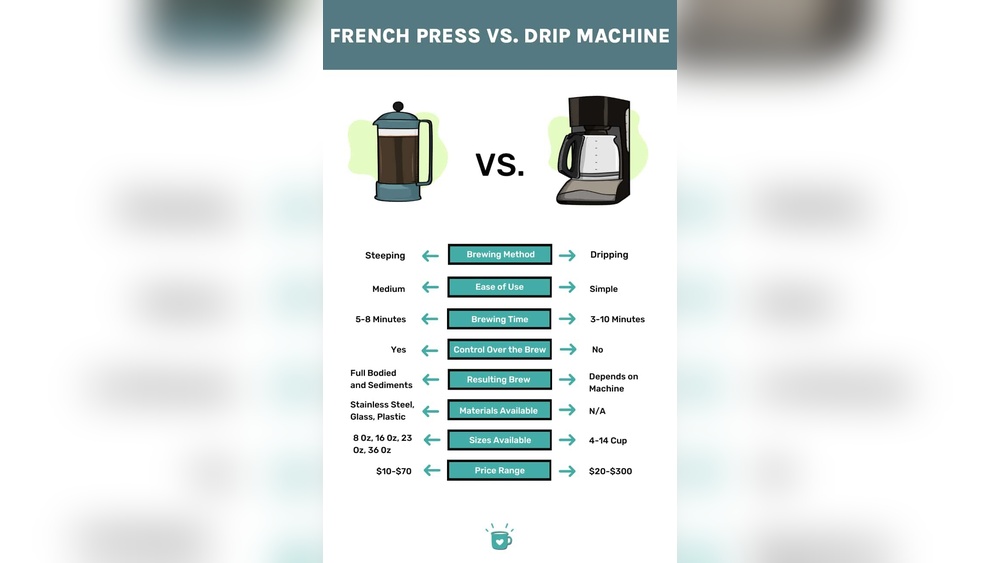
When you wake up in the morning, the way you make your coffee can shape your entire day. For many, the choice comes down to two popular options: the drip coffee maker and the French press. These two methods have passionate fans, but they create very different coffee experiences. Whether you want convenience, rich flavor, or something in between, understanding their differences will help you enjoy your perfect cup every time.
This guide explores everything you need to know about drip coffee makers vs French presses. You’ll learn how each works, their pros and cons, which is best for different lifestyles, and even some surprising details most beginners miss. With practical advice and real-world examples, you’ll finish this article knowing exactly which method is right for you—or if you should keep both in your kitchen.
How Drip Coffee Makers Work
Drip coffee makers are a common sight in homes and offices around the world. Their popularity comes from their simplicity and ability to brew multiple cups with little effort.
A typical drip coffee maker uses an internal water reservoir, a heating element, a paper or mesh filter, and a carafe. Here’s how the process works:
- You add cold water to the reservoir.
- Place ground coffee in the filter basket.
- The machine heats the water, then drips it over the grounds.
- Hot water extracts flavors as it passes through, dripping brewed coffee into the carafe.
The process is automated—just press a button and wait. Most drip coffee makers brew 4 to 12 cups at a time, making them ideal for families or groups.
Features That Matter
When choosing a drip coffee maker, pay attention to:
- Brew size: Some are single-serve, others make large pots.
- Programmable timer: Lets you set a brew time in advance.
- Hot plate: Keeps coffee warm but can sometimes “burn” it.
- Showerhead design: Distributes water evenly for better extraction.
- Filter type: Paper filters remove oils; mesh filters let more oils through for a richer cup.
Some high-end models have pre-infusion settings, temperature control, or even Wi-Fi. But for most people, a basic, reliable machine does the job well.
When Is A Drip Coffee Maker Best?
Drip coffee makers shine when you:
- Need to brew for several people at once
- Want a “set it and forget it” experience
- Prefer a clean, mild coffee taste
- Like waking up to a ready-made pot
If you drink multiple cups or share coffee with family or coworkers, drip machines save time and effort.
How The French Press Works
The French press is a classic brewing device known for its simplicity and ability to make bold, flavorful coffee. Also called a press pot or plunger pot, it consists of a glass or stainless-steel cylinder, a metal filter, and a plunger.
Here’s how you use it:
- Add coarsely ground coffee to the bottom of the cylinder.
- Pour hot water (just off the boil) over the grounds.
- Stir gently, then place the lid with plunger on top.
- Let the coffee steep for 4 minutes.
- Slowly press the plunger down to separate grounds from liquid.
- Pour and enjoy.
The French press uses a metal mesh filter, which lets more natural coffee oils and tiny particles through. This creates a rich, full-bodied cup with stronger flavors and aromas.
Features That Matter
When choosing a French press, consider:
- Size: Common sizes are 12, 34, and 51 ounces.
- Build material: Glass lets you see the process; stainless steel keeps coffee hot longer.
- Filter quality: A tight mesh avoids grounds in your cup.
- Ease of cleaning: Some can go in the dishwasher.
Some French presses have double-walled insulation or extra filters. But even simple models can brew excellent coffee.
When Is A French Press Best?
A French press is ideal when you:
- Enjoy strong, robust flavors
- Want more control over brewing time and temperature
- Usually make 1–2 cups at a time
- Don’t mind a bit of sediment (“sludge”) in your cup
It’s also popular with travelers and campers, since it doesn’t need electricity.

Credit: twochimpscoffee.com
Taste And Flavor Comparison
Coffee taste depends on brewing method, grind size, water temperature, and filter type. Drip coffee makers and French presses create very different flavor profiles.
Drip Coffee Maker Flavor
Drip machines produce a clean, light-bodied cup. Paper filters trap oils and fine particles, so the coffee tastes smooth and mild. This style highlights brighter, more acidic notes in beans, especially from Central America or Africa.
Because the water passes quickly through the grounds, there’s less bitterness and less body. Some coffee fans say drip coffee tastes “watery,” but for others, this makes it easy to drink cup after cup.
French Press Flavor
French press coffee is full-bodied and intense. The metal filter allows natural oils and tiny grounds to stay in the cup, adding richness and texture. This method brings out deeper chocolate, nut, and caramel notes—especially in dark roasts or coffees from South America or Indonesia.
The longer steeping time can create more bitterness if you use a fine grind or wait too long. But with the right technique, you get a bold, aromatic cup.
Side-by-side Tasting
If you brew the same beans with both methods, you’ll notice:
- Drip coffee: Clean, smooth, subtle, little or no oil on the surface
- French press: Rich, heavy, strong aroma, visible oil “sheen” on top
If you prefer delicate, tea-like coffee, go with a drip machine. If you crave powerful flavors, the French press will impress you.
Convenience And Speed
How you brew your coffee affects your morning routine. Let’s compare the time, effort, and cleanup required for each method.
Drip Coffee Maker
- Setup: Add water, coffee, and push a button—takes 1-2 minutes.
- Brew time: 5–10 minutes for a full pot.
- Hands-on time: Very little; you can walk away.
- Cleanup: Remove the filter and grounds, rinse basket and carafe.
Many models have timers, so you can set up everything the night before and wake up to fresh coffee. Drip makers are perfect for busy mornings or multi-tasking.
French Press
- Setup: Measure coffee and water, heat water, add, and stir—about 2–3 minutes.
- Brew time: 4 minutes steeping (plus time to heat water).
- Hands-on time: Moderate; you need to watch the timer and press the plunger.
- Cleanup: Disassemble, remove grounds (can be messy), rinse or wash parts.
French press brewing takes a few minutes longer and more attention, but many enjoy the ritual. It’s a slower, more mindful way to start your day.
Which Is Faster?
If speed is your top concern, a drip coffee maker with a timer is unbeatable for large batches. For single cups, the French press can be just as quick, especially if you use an electric kettle.

Credit: www.peacemakercoffeecompany.com
Cost And Value
Your budget can influence which brewing method fits best. Let’s break down the main costs.
Drip Coffee Maker
- Machine price: Basic models start around $20. High-end models can reach $300+.
- Filters: Paper filters cost $5–$10 for 100. Metal filters are reusable but cost more upfront.
- Electricity: Minimal, but higher if you keep coffee on the hot plate.
- Maintenance: Descale with vinegar every few months.
Drip makers last 3–8 years on average, depending on the quality and maintenance.
French Press
- Press price: Simple glass models start at $15. Stainless steel, insulated, or designer versions can be $30–$100.
- No paper filters: Just coffee and water.
- No electricity: Unless you use an electric kettle.
- Maintenance: Wash after each use.
A well-made French press can last for decades with proper care.
Long-term Value
French presses are cheaper in the long run, especially for singles or small households. Drip coffee makers pay off if you brew many cups daily or need a timer. For both, the biggest ongoing cost is quality coffee beans.
Environmental Impact
More coffee drinkers care about sustainability. Here’s how both methods compare.
Drip Coffee Maker
- Paper filters: Create waste, unless composted or biodegradable.
- Plastic components: Many machines use plastic, which may not last as long.
- Electricity use: Small but ongoing.
- Water use: Efficient, but hot plates can evaporate coffee over time.
Some companies make reusable mesh filters and energy-efficient machines to reduce waste.
French Press
- No filters: No daily waste; just compost the grounds.
- Stainless steel/glass: Lasts longer, less plastic.
- No electricity: Only needed for boiling water (can use stovetop or solar).
- Water use: Minimal.
The French press is generally more eco-friendly, especially if you choose models without plastic.

Credit: www.theculturedcup.com
Customization And Control
How much control do you want over your coffee? Each method offers different levels of flexibility.
Drip Coffee Maker
- Grind size: Medium grind works best; fine or coarse can cause issues.
- Water temperature: Most machines heat water to 190–205°F, but cheaper models may not reach optimal temperature.
- Brew time: Set by the machine; not adjustable.
- Strength: Can adjust by adding more/less coffee or water.
Higher-end machines let you adjust temperature, pre-infusion, or saturation, but most are “one size fits all. ”
French Press
- Grind size: Coarse grind is ideal. Too fine, and you’ll get sludge.
- Water temperature: You control it (ideal is 195–205°F).
- Steep time: Adjust from 3–5 minutes for stronger or milder coffee.
- Strength: Easily change coffee-to-water ratio.
The French press is perfect for those who like to experiment and refine their technique.
Cleaning And Maintenance
Keeping your coffee gear clean matters for taste and health.
Drip Coffee Maker
- Daily: Discard filter, rinse basket and carafe.
- Weekly: Wash removable parts with soapy water.
- Monthly: Descale with vinegar or cleaning tablets.
Neglecting cleaning can lead to stale coffee or mold. Some parts are dishwasher safe; others are not.
French Press
- After each use: Remove grounds (compost or trash), rinse cylinder and plunger.
- Weekly: Deep clean mesh filter and all parts.
- Dishwasher safe? : Many glass and stainless models are, but check your manual.
French presses are simple but can be messy, especially if you have a sink without a garbage disposal.
Versatility And Extra Uses
Both methods can do more than just brew coffee.
Drip Coffee Maker
- Iced coffee: Brew over ice for a quick cold drink.
- Tea: Some machines have a setting for tea bags or loose tea.
- Hot chocolate: Can mix cocoa in the carafe.
- Other uses: Some people use drip makers to heat water for instant noodles or oatmeal.
French Press
- Tea: Works well for loose leaf tea.
- Cold brew: Add cold water and steep in the fridge overnight.
- Frothing milk: Pump plunger to foam milk for lattes.
- Fruit infusions: Steep herbs or fruit for unique drinks.
The French press is more flexible for small-batch experiments.
Health Considerations
Some coffee methods affect your health in small ways.
Drip Coffee Maker
Paper filters remove cafestol—a compound in coffee oils that can raise cholesterol in high amounts. If you drink a lot of coffee and have cholesterol concerns, drip coffee is a safer choice.
French Press
French press coffee contains more natural oils and cafestol, which may increase cholesterol if you drink several cups daily. For most healthy adults, this isn’t a problem, but it’s worth noting if you have heart or cholesterol issues. You can reduce cafestol by filtering French press coffee through a paper filter before drinking.
Common Mistakes Beginners Make
New users often run into a few common problems:
Drip Coffee Maker
- Using the wrong grind: Too fine leads to over-extraction and bitterness; too coarse, and the coffee is weak.
- Not cleaning regularly: Old oils and residue cause off-flavors.
- Leaving coffee on the hot plate: This “cooks” the coffee and makes it taste burnt.
- Bad water quality: Chlorine or minerals in tap water can ruin your cup.
French Press
- Using fine grounds: Causes sludge and makes pressing difficult.
- Steeping too long: Results in bitterness.
- Not stirring after adding water: Grounds don’t extract evenly.
- Pressing the plunger too fast: Can spill hot coffee or break the glass.
Both methods require a bit of practice for perfect results.
Real-world Examples
To make things clearer, here are two common scenarios:
- Office environment: A drip coffee maker is set up in the break room. Employees fill the reservoir and basket, press “Brew,” and everyone gets a hot cup within minutes. Cleanup is easy, and the process is consistent.
- Home weekend ritual: Someone uses a French press to brew a single mug of Ethiopian coffee. They use a kitchen scale, time the steep, and enjoy the rich, oily flavors while reading the paper. Cleanup takes a few minutes, but the experience is relaxing.
Both methods serve different needs. Neither is “better”—just different.
Side-by-side Comparison
Here’s a quick comparison of key factors:
| Feature | Drip Coffee Maker | French Press |
|---|---|---|
| Flavor | Clean, mild | Rich, full-bodied |
| Brew Time | 5–10 minutes | 4–6 minutes |
| Batch Size | 2–12 cups | 1–4 cups |
| Effort | Very low | Medium |
| Cleanup | Easy | Can be messy |
| Cost | $20–$300 | $15–$100 |
| Eco-Friendly | Depends on filters | Highly eco-friendly |
Which Is Right For You?
Choosing between a drip coffee maker and a French press depends on your preferences, habits, and needs.
Consider these questions:
- Do you value speed and convenience? Drip makers win here.
- Are you brewing for many people, or just yourself? Drip makers handle crowds; French presses are best for solo cups.
- Do you enjoy rich, strong coffee, or a lighter taste? French press offers more body; drip is milder.
- Is cleanup a deal breaker? Drip makers are less messy.
- Do you care about sustainability? French press is greener.
- Do you love experimenting with grind, time, and temperature? French press offers more control.
Many coffee lovers keep both in their kitchen—drip for weekdays, French press for weekends.
Data Table: Key Brewing Parameters
Let’s look at some ideal parameters for each method:
| Method | Grind Size | Water Temp | Steep/Brew Time | Coffee:Water Ratio |
|---|---|---|---|---|
| Drip Coffee Maker | Medium | 195–205°F | 5–10 min | 1:16 |
| French Press | Coarse | 195–205°F | 4 min | 1:15 |
Non-obvious Insights Most Beginners Miss
- Water Quality Matters More Than You Think: Both methods will taste bad if you use hard or chlorinated tap water. Try filtered or bottled water for a noticeable improvement.
- Freshness of Beans: Old, pre-ground coffee loses flavor quickly. Buy whole beans and grind right before brewing for the best taste.
- Coffee-to-Water Ratio Is Key: Small changes in how much coffee you use can greatly affect taste. Use a kitchen scale for accuracy.
- Let Coffee “Bloom”: For both methods, pouring a small amount of hot water on the grounds and letting them “bloom” for 30 seconds releases trapped gases and improves extraction.
External Resource For Deeper Learning
If you want to go deeper into coffee brewing science and techniques, check out this guide from the National Coffee Association.
Frequently Asked Questions
What Type Of Coffee Grind Should I Use For Each Method?
For drip coffee makers, use a medium grind (like table salt). For French press, always use a coarse grind (like breadcrumbs). The right grind prevents bitterness and clogging.
Can I Make Tea In A Coffee Maker Or French Press?
Yes, you can. Many people brew loose-leaf tea in a French press. Some drip machines have a tea setting, but avoid using the same machine for both as flavors can mix.
Is French Press Coffee Healthier Than Drip Coffee?
Both are healthy in moderation. Drip coffee removes more oils that can raise cholesterol, while French press keeps them in your cup. If you have cholesterol issues, ask your doctor about cafestol.
Why Does My French Press Coffee Taste Bitter?
Bitterness usually comes from over-steeping or using fine grounds. Try steeping for only 4 minutes and use a coarse grind. Clean your press regularly to avoid old residue.
Which Method Is Better For Entertaining Guests?
A drip coffee maker is better for groups, as it makes more coffee with less effort. The French press is best for a few people who appreciate strong, rich coffee.
Finding the best coffee brewing method is personal. Both drip coffee makers and French presses have their strengths. By understanding the differences, you can make your mornings better—one cup at a time.