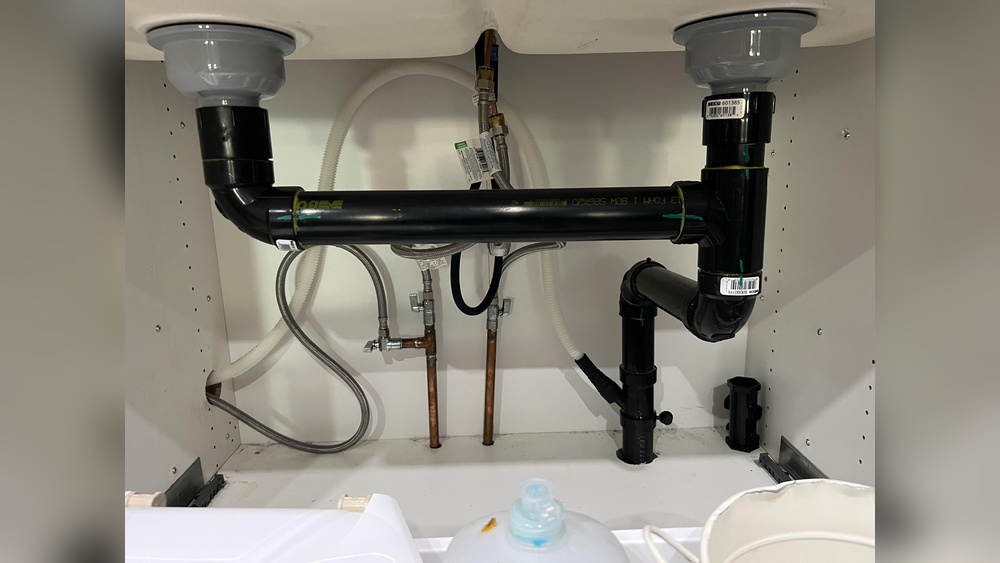
Have you ever wondered what happens under your kitchen sink? You might see pipes but not know why they are shaped a certain way. One important part is the P trap. But what is a P trap? And does a kitchen sink really need one? Let’s find out!
What Is a P Trap?
A P trap is a curved pipe under your sink. It looks like the letter “P” or a sideways “U”. It connects the sink drain to the home’s plumbing system. You can easily spot it because of its special bend.
The P trap is not just a random pipe. It has a very important job. It holds some water at all times. This water acts as a barrier. It stops bad smells from the sewer from coming back up into your kitchen.
How Does a P Trap Work?
When you run water in your sink, the water flows down the drain. Some water stays in the P trap’s curved part. This water blocks gases from the sewer. These gases can smell bad and be harmful to breathe.
Without this water, the gases could come into your kitchen. That would make your home smell bad. It could also make you sick. So, the water in the P trap is very important.
Why Do Kitchens Need a P Trap?
Kitchens are places where you prepare food. You want them to be clean and safe. A P trap helps keep the kitchen fresh. It stops sewer smells and gases from entering the room.
Also, kitchens use water for washing dishes, hands, and food. All this water goes down the drain. The P trap helps keep the pipes working well by preventing blockages. It catches small objects that might fall down, like a spoon or a piece of food.
What Happens Without a P Trap?
If you don’t have a P trap, bad smells will come into your kitchen. The sewer gases can cause health problems. They can also make your home uncomfortable to live in.
Without a P trap, pests like flies or small bugs can enter your home through the pipes. This can cause more problems. So, the P trap also helps keep bugs away.
Is a P Trap Required by Law?
In most places, building rules say you must have a P trap for kitchen sinks. These rules help keep homes safe and healthy. Plumbers follow these rules when they install sinks.
If you build or fix a kitchen sink, you usually need to include a P trap. This is true for new homes and for repairs. It is a simple part but very important.
Types of P Traps for Kitchen Sinks
There are different types of P traps you might see:
- Plastic P Traps: Made from PVC or ABS plastic. They are light and easy to install.
- Metal P Traps: Usually made of brass or chrome. They look nice and last long.
- Bell Trap: Less common, but works in some older homes.
Most kitchens today use plastic or metal P traps. They both work well to stop smells and keep pipes clear.
How to Check If Your Kitchen Sink Has a P Trap
Look under your kitchen sink. Find the pipe that connects to the drain. Check if it has a curved shape like the letter “P” or “U”.
If you see a straight pipe with no curve, you might not have a P trap. This can cause problems like bad smells or blockages.
Can You Install a Kitchen Sink Without a P Trap?
Technically, you can connect a sink drain without a P trap. But it is not a good idea. You will get bad smells in your kitchen. Also, you risk breaking building codes.
Installing a P trap is easy and not expensive. It is better to have one to keep your home safe and fresh.

Credit: gharpedia.com
How to Install a P Trap
If you want to install a P trap yourself, here are simple steps:
- Turn off the water supply.
- Remove the old drain pipe if needed.
- Attach the curved P trap pipe to the sink drain.
- Connect the other end to the wall drain pipe.
- Tighten all connections by hand or with a wrench.
- Turn on water and check for leaks.
If you are not sure, ask a plumber to help. It is important to do it right.
Common Problems with P Traps
Even though P traps work well, sometimes they can cause problems:
- Clogs: Food bits or grease can block the trap.
- Dry Trap: If water evaporates, the trap loses its water seal.
- Leaks: Loose connections can cause water to leak.
To avoid problems, clean the trap regularly and run water often.
Benefits of Having a P Trap
| Benefit | Why It Matters |
|---|---|
| Stops bad smells | Keeps your kitchen smelling fresh and clean |
| Prevents pests | Blocks insects and bugs from entering your home |
| Protects health | Stops harmful sewer gases from entering living spaces |
| Meets building codes | Ensures your home follows safety rules |
| Helps prevent clogs | Catches debris before it enters main pipes |

Credit: www.reddit.com
Frequently Asked Questions
What Is A P Trap In A Kitchen Sink?
A P trap is a curved pipe under the sink. It holds water to block sewer gases from entering your home.
Why Does A Kitchen Sink Need A P Trap?
The P trap stops bad smells from coming up through the drain. It also helps catch small items that fall in.
Can A Kitchen Sink Work Without A P Trap?
A sink can drain without a P trap, but sewer gases will enter your kitchen. This causes bad odors and health risks.
How Does A P Trap Prevent Sewer Gas Smells?
The P trap keeps water in its curve, which blocks sewer gases from rising. This water acts as a seal.
Conclusion
So, does a kitchen sink need a P trap? The answer is yes. It is a small but very important part. It stops bad smells and keeps your home healthy. It also helps protect your plumbing system.
Most building rules require a P trap under the kitchen sink. If you don’t have one, you might face problems with smells or pests. Installing a P trap is simple and not expensive.
Next time you look under your kitchen sink, check for the P trap. It is working hard to keep your kitchen safe and fresh. And that is something every home needs.