Coffee Press Vs Coffee Maker: A Detailed Comparison for Every Coffee Lover
Coffee is more than just a drink—it’s a daily ritual for millions. For some, the process of making coffee is as important as the taste. That’s why choosing the right brewing method matters so much. Two of the most popular ways to make coffee at home are the coffee press (often called French press) and the coffee maker (usually a drip machine). Both have loyal fans, but they work in very different ways and create unique flavors.
If you’re unsure which one is right for you, you’re not alone. Many people wonder if they should buy a coffee press for bold flavor, or if a drip coffee maker is better for convenience. Some want to know which method is healthier, which is cheaper, and which fits their lifestyle.
In this guide, you’ll find clear answers to all these questions. You’ll learn how each method works, what makes them different, and which one might be your perfect match. Whether you’re a coffee beginner or want to upgrade your morning routine, this article will help you make an informed choice.
What Is A Coffee Press?
A coffee press is a simple, classic tool for brewing coffee. Most people know it as the French press. It uses a glass or stainless-steel carafe, a metal filter, and a plunger. You add ground coffee and hot water, wait a few minutes, then press the plunger to separate the grounds from the liquid. The result is a strong, full-bodied cup of coffee.
How The Coffee Press Works
- Add coarse coffee grounds to the carafe.
- Pour hot water (about 90–96°C or 195–205°F) over the grounds.
- Stir gently to mix.
- Place the lid with the plunger on top and let it steep for 4–5 minutes.
- Slowly press the plunger down to filter the coffee.
- Pour and enjoy.
There’s no paper filter, so more of the coffee’s oils and tiny particles end up in your cup. This gives French press coffee a richer taste and heavier texture.
Common Types Of Coffee Presses
- Glass French press: Most popular, easy to clean, lets you see the brewing process.
- Stainless-steel press: Keeps coffee hot longer, more durable.
- Travel press: Portable, often made with plastic or metal for on-the-go brewing.
Popular Brands
- Bodum
- Espro
- Frieling
- SterlingPro
What Is A Coffee Maker?
A coffee maker usually means an automatic drip coffee machine. These machines heat water and drip it over ground coffee held in a paper or metal filter. The brewed coffee then collects in a pot or carafe. Drip coffee makers are common in homes and offices because they’re convenient and can make several cups at once.
How The Coffee Maker Works
- Add medium-ground coffee to the filter basket.
- Fill the water reservoir with cold water.
- Turn on the machine.
- The machine heats water and drips it over the grounds.
- Coffee drips into a carafe, ready to pour.
Drip coffee is usually lighter and cleaner in taste compared to a coffee press. The paper filter removes more oils and small particles.
Types Of Coffee Makers
- Standard drip machine: Makes 4–12 cups, basic and easy to use.
- Single-serve pod machine: Uses pods like K-Cups for one cup at a time.
- Programmable coffee maker: Lets you set a timer for automatic brewing.
- Thermal carafe maker: Keeps coffee hot without a warming plate.
Popular Brands
- Mr. Coffee
- Keurig
- Cuisinart
- Breville
Main Differences: Coffee Press Vs Coffee Maker
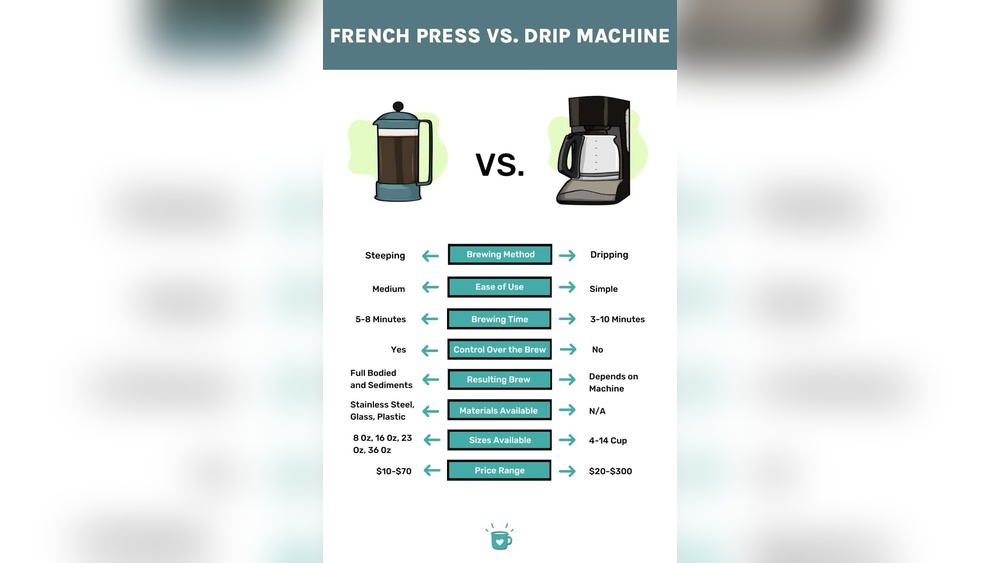
Choosing between a coffee press and a coffee maker depends on what matters most to you. Here’s a comparison of the key differences:
| Feature | Coffee Press | Coffee Maker |
|---|---|---|
| Brew Time | 4–5 minutes | 5–10 minutes (depends on batch size) |
| Flavor Profile | Full-bodied, rich | Clean, mild |
| Ease of Use | Manual process, simple parts | Automatic, set-and-forget |
| Cleaning | Quick rinse and scrub | Filter disposal, carafe washing |
| Batch Size | 1–4 cups typical | 1–12 cups, some single-serve |
| Cost | Usually cheaper | Wider price range, often more expensive |
| Filter Type | Metal mesh | Paper or metal |
| Portability | High | Low to medium |
The Flavor Experience
One of the biggest factors in choosing your brewing method is taste. Each method gives a very different flavor profile.
Coffee Press Flavor
A French press gives you a strong, bold cup with a heavy mouthfeel. The metal filter lets natural oils and tiny particles stay in your cup. Coffee tastes more intense, sometimes with a hint of sediment at the bottom. Many coffee fans love this for its depth and complexity.
Coffee Maker Flavor
A drip coffee maker produces a cleaner, lighter cup. The paper filter traps oils and fine particles, so the coffee is less heavy and often less bitter. This can be ideal for people who prefer a smooth, mild flavor.
Non-obvious Insight
Not all coffee beans work equally well for both methods. Beans with bright acidity (like Ethiopian or Kenyan beans) often taste best with a coffee maker, while dark, chocolatey beans (like Sumatran) shine in a French press.
Brewing Process And Control
How much control do you want over your coffee? The answer might help you decide between these two methods.
Manual Vs. Automatic
- The coffee press is all manual. You control water temperature, steep time, and the coffee-to-water ratio. This means you can tweak the recipe until it’s perfect for your taste.
- The coffee maker is mostly automatic. You add water and grounds, press a button, and wait. Some machines let you change brew strength or temperature, but most decisions are made by the machine.
Why Control Matters
If you enjoy experimenting and want to learn about coffee, the French press is perfect. You can adjust every step. If you want fast, consistent coffee with no effort, the drip machine is better.
Convenience And Speed
Modern life is busy, so convenience matters. Here’s how the two methods compare.
Coffee Press Convenience
- Setup: Takes a few minutes.
- Cleanup: Quick, but you need to dump out grounds and rinse.
- Portability: Very portable—no electricity needed, great for camping or travel.
- Batch size: Makes 1–4 cups, best for small groups or solo drinkers.
Coffee Maker Convenience
- Setup: Just add water and coffee, press a button.
- Cleanup: Remove and throw away the paper filter (or rinse a metal one), wash carafe.
- Batch size: Great for families or offices, can make a large pot.
- Advanced features: Some have timers, auto-shutoff, and keep-warm plates.
Real-world Example
A busy parent may prefer a programmable coffee maker for quick mornings. A student who enjoys slow mornings may choose the French press for more control.

Credit: www.peacemakercoffeecompany.com
Cost And Value
Let’s break down the costs for both brewing systems.
Coffee Press Costs
- Initial price: $15–$50 for most good presses.
- Ongoing costs: Just coffee beans; no filters or pods needed.
- Maintenance: Minimal, just regular cleaning.
Coffee Maker Costs
- Initial price: $20–$300+ depending on features.
- Ongoing costs: Need to buy paper filters (or reusable metal ones), occasional descaling products.
- Maintenance: More parts to clean or replace over time.
Cost Comparison Table
| Cost Factor | Coffee Press | Coffee Maker |
|---|---|---|
| Initial Purchase | $15–$50 | $20–$300+ |
| Annual Operating (filters, cleaning) | $0–$10 | $15–$60 |
| Replacement Parts | Rarely needed | Carafe, filters, sometimes needed |
Non-obvious insight: Over 5 years, a coffee press is often much cheaper, especially if you drink just 1–2 cups a day.
Health And Nutrition Differences
Some people ask if one method is healthier than the other. Here’s what you need to know:
Coffee Press Health Effects
French press coffee contains more cafestol, a natural oil found in coffee. Studies show cafestol can raise LDL (“bad”) cholesterol if you drink several cups daily. If you have cholesterol concerns, talk to your doctor.
Coffee Maker Health Effects
Paper filters catch most cafestol, making drip coffee lower in these oils. If you want to enjoy coffee but limit cholesterol-raising compounds, a drip coffee maker is the better choice.
Other Health Factors
- Both methods give you the caffeine boost you want.
- Coffee makers sometimes use plastic parts that may leach chemicals if not well-made. Look for BPA-free models.
For more details, the Harvard T.H. Chan School of Public Health explains these coffee health effects.
Environmental Impact
Coffee lovers often care about sustainability. Here’s how the two compare:
Coffee Press Impact
- No paper filters—less waste.
- Most presses are durable and last years.
- Just compost the used grounds.
Coffee Maker Impact
- Paper filters create ongoing waste (though they’re biodegradable).
- Some machines use single-use plastic pods, which are bad for the environment.
- Electric models use energy.
Pro Tip
If you use a drip machine, choose a reusable metal filter and buy coffee in bulk to reduce waste.
Cleaning And Maintenance
How Easy Is It To Keep Each System Clean?
Coffee Press Cleaning
- Simple design—just rinse out grounds and wash the carafe and plunger.
- Most parts are dishwasher-safe.
- No hidden tubes or complex parts.
Coffee Maker Cleaning
- Carafe, basket, and sometimes water reservoir need washing.
- Need to descale with vinegar or special cleaner every few months.
- Paper filters can sometimes clog if not replaced.
Common Mistake
Many people forget to clean their coffee maker’s internal parts. This can cause stale flavors and even mold over time. Always follow the manufacturer’s cleaning instructions.

Credit: twochimpscoffee.com
Who Should Choose A Coffee Press?
The coffee press is best if you:
- Love bold, rich coffee with a heavier body.
- Want full control over every step.
- Don’t mind a small bit of sediment.
- Prefer a manual, hands-on experience.
- Need something portable for travel or camping.
- Want a simple, eco-friendly option.
Who Should Choose A Coffee Maker?
A drip coffee maker is right for you if you:
- Prefer a clean, mild cup.
- Need to make coffee for several people at once.
- Want to “set and forget” without watching the brew.
- Like programmable features or timers.
- Want lower cholesterol-related oils in your cup.
- Don’t mind using paper filters or a bit more plastic.

Credit: voltagecoffee.com
Common Mistakes And How To Avoid Them
With A Coffee Press
- Using too fine a grind. This makes it hard to press and causes sludge.
- Not timing the steep correctly. Less than 4 minutes is weak, over 6 minutes gets bitter.
- Water too hot. Boiling water burns grounds; let it cool for 30 seconds after boiling.
With A Coffee Maker
- Wrong coffee grind. Too fine a grind can overflow the filter; too coarse makes weak coffee.
- Skipping descaling. Hard water minerals build up, harming taste and machine life.
- Letting coffee sit on the warming plate. This makes coffee taste burnt. Transfer to a thermal carafe if possible.
Specialty Variations
Both tools now have creative versions for coffee lovers.
Coffee Press Innovations
- Double-walled, insulated presses keep coffee hot for hours.
- Small travel presses for single servings.
- Mesh filters with finer screens for less sediment.
Coffee Maker Advances
- Machines with built-in grinders for fresh-ground beans.
- Smart coffee makers you can control with your phone.
- Models that let you brew iced coffee or cold brew.
Comparing Taste, Convenience, And Cost Side By Side
Let’s see how each method scores (1–5, higher is better):
| Category | Coffee Press | Coffee Maker |
|---|---|---|
| Flavor Richness | 5 | 3 |
| Convenience | 3 | 5 |
| Cleaning Ease | 4 | 3 |
| Cost | 5 | 3 |
| Health (cholesterol) | 2 | 5 |
| Portability | 5 | 2 |
| Batch Size | 3 | 5 |
Making Your Decision
There is no single “best” brewing method for everyone. If you love customizing your coffee and don’t mind a hands-on process, a coffee press gives you the most flavor and control. If you need speed, consistency, and large amounts, a drip coffee maker is your best friend.
Don’t forget: You can own both! Many coffee lovers use a French press for slow weekends and a drip machine for busy mornings.
Frequently Asked Questions
What Grind Size Should I Use For A Coffee Press?
Use a coarse grind. Fine coffee grounds can slip through the mesh filter, making your coffee gritty and hard to press. A grind similar to sea salt works best.
Can I Make Tea In A Coffee Press?
Yes, you can. A French press is great for making loose-leaf tea. Just clean the press well before switching between coffee and tea to avoid mixing flavors.
How Often Should I Clean My Coffee Maker?
Clean the removable parts (carafe, basket) after every use. Descale the machine every 1–3 months, depending on your water hardness and how often you brew.
Is French Press Coffee Stronger Than Drip Coffee?
French press coffee is usually stronger in flavor and body. However, caffeine content depends more on the amount of coffee used and steeping time. Both can be adjusted for strength.
What’s The Best Water Temperature For Brewing Coffee?
The ideal temperature is 90–96°C (195–205°F). Boiling water can burn coffee grounds, while cooler water won’t extract enough flavor.
Coffee brewing is a personal adventure. By understanding the differences between the coffee press and coffee maker, you can choose what’s best for your taste, health, and lifestyle. Enjoy your perfect cup, every day!