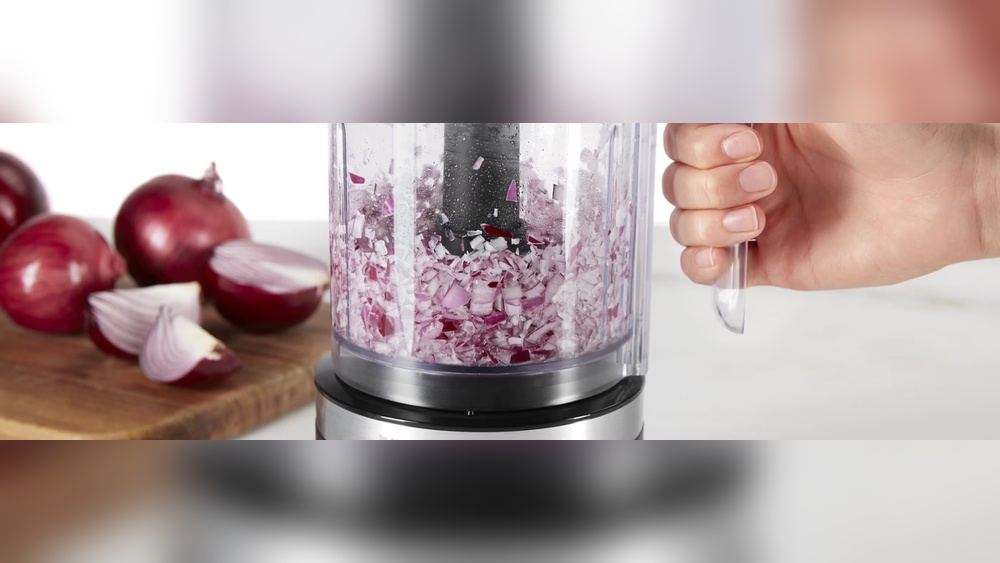
Chopping onions is a basic kitchen task, but it can also be a frustrating one. Many people struggle with tears, uneven cuts, and wasted time. If you’re looking for the best way to chop onions on a food processor, you’re not alone. This guide will take you through everything you need to know—whether you’re a beginner or someone wanting to upgrade your kitchen skills. You’ll learn how to get even, tear-free, and quick results using a food processor, plus tips that most home cooks miss. By the end, chopping onions will feel simple, safe, and much faster than ever before.
Why Use A Food Processor For Chopping Onions?
Traditional onion chopping with a knife can be slow, messy, and uncomfortable—especially if you have a big batch to prepare. A food processor changes the game in several ways:
- Speed: What takes minutes by hand takes seconds with a machine.
- Consistency: Onions are chopped into similar-sized pieces, which helps even cooking.
- Reduced irritation: The quick process means less exposure to onion fumes, so fewer tears.
- Less effort: Great for people with limited hand strength or arthritis.
Some might worry about over-processing or uneven results, but with the right technique, a food processor is a perfect helper for onion prep.
Choosing The Right Food Processor
Not all food processors are made equal. For chopping onions, certain features make the process smoother and safer.
Key Features To Look For
- Sharp blades: Dull blades can mash onions instead of chopping them.
- Pulse function: This lets you control the chopping, so onions don’t turn into mush.
- Capacity: A 7-10 cup bowl suits most home kitchens. Too small, and you’ll need to process in batches.
- Easy assembly: Complicated lids or parts can slow you down.
- Safety interlock: Prevents the machine from starting unless everything is in place.
Popular Food Processor Brands For Chopping Onions
Here’s a quick comparison of three popular models often chosen for chopping onions:
| Brand & Model | Capacity | Blade Type | Pulse Function | User Rating |
|---|---|---|---|---|
| Cuisinart DFP-14BCNY | 14 cups | Stainless steel | Yes | 4.7/5 |
| KitchenAid KFP0718CU | 7 cups | Stainless steel | Yes | 4.6/5 |
| Hamilton Beach 70730 | 10 cups | Stainless steel | Yes | 4.5/5 |
Most modern food processors from well-known brands will do the job. Focus on sharp blades and an easy-to-use pulse button.
Preparing Onions For The Food Processor
Before you toss onions into your food processor, a little prep is necessary for the best results.
Step-by-step Preparation
- Peel the onion: Remove the papery outer skin.
- Trim the ends: Cut off both the root and stem ends.
- Cut into chunks: Slice the onion in half, then each half into quarters. For large onions, you may want to cut each quarter in half again.
- Remove green shoots: Sometimes onions have a green stem inside. This can be bitter, so remove it if you see one.
Non-obvious tip: If you’re chopping a large batch, keep the cut pieces similar in size. This helps the food processor chop them evenly.
Why Cutting Before Processing Matters
You might wonder why you need to cut onions before using the food processor. Whole onions are too big for the blades to catch and chop evenly. Large pieces can also cause uneven processing, with some parts over-chopped and others left whole.
Expert insight: If you want diced onions, smaller chunks at the start are key. If you only want coarsely chopped onions (for soup or stew), larger pieces are fine.
How To Chop Onions In A Food Processor: Step-by-step
Chopping onions in a food processor is fast, but technique matters. Follow these steps for perfect results:
1. Assemble The Food Processor
Make sure the bowl, blade, and lid are locked in place. Check your manual if you’re unsure.
2. Add Onion Chunks
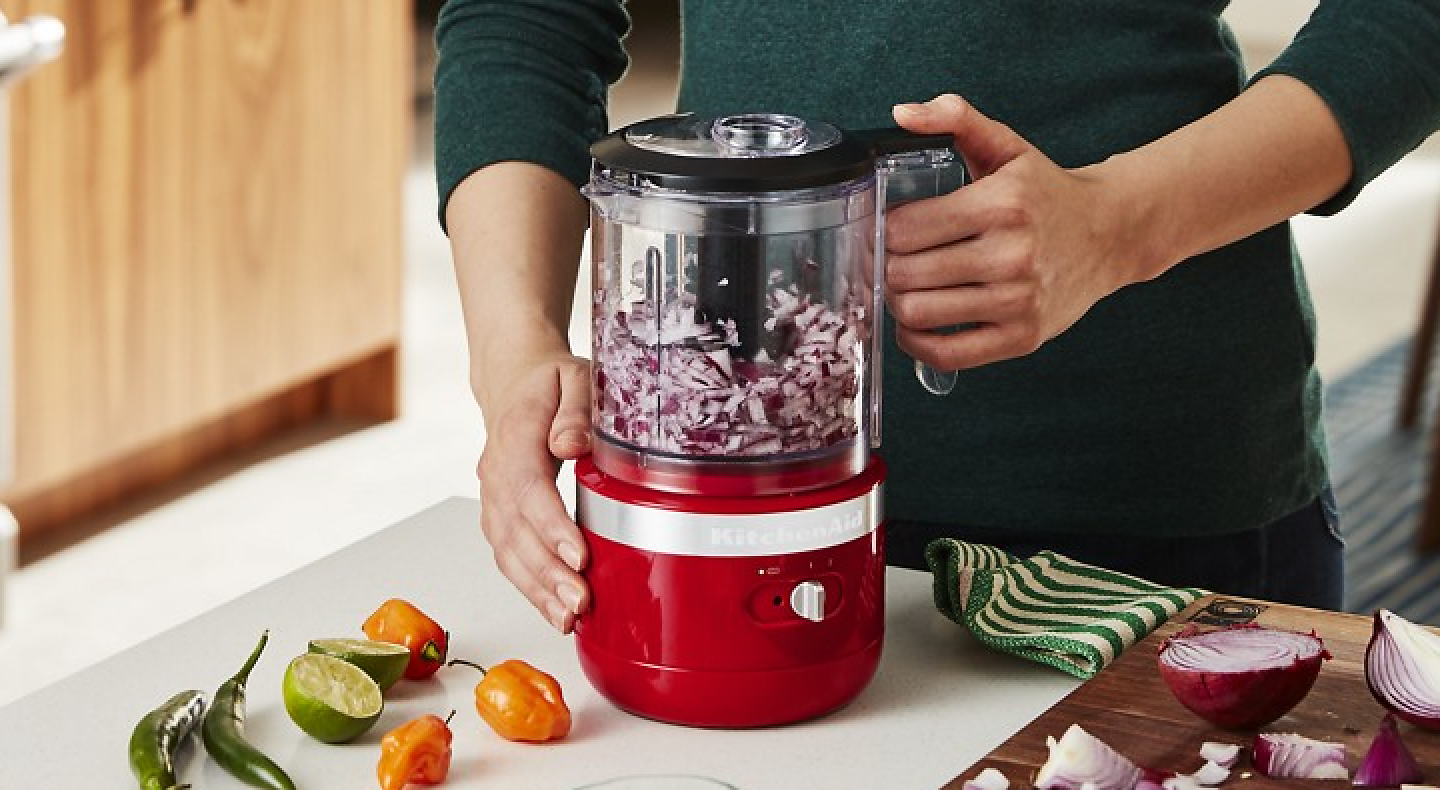
Place the onion pieces in the bowl. Do not overfill—work in batches if necessary. Most processors handle 1-2 onions at a time.
3. Use The Pulse Function
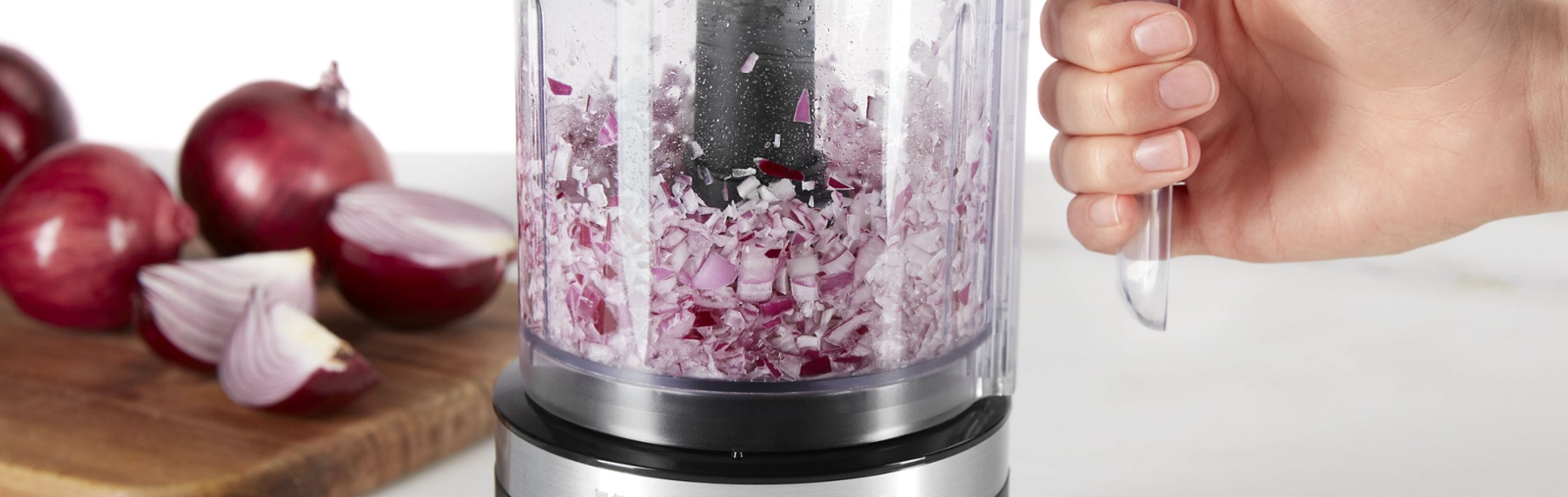
Instead of letting the machine run continuously, use short pulses (quick on/off presses). This gives you control over the chop size and prevents onion mush.
- For a coarse chop (salsa, stew): 2-3 pulses
- For a fine chop (salads, sauces): 4-7 pulses
- For mincing (burgers, meatballs): 8-10 pulses
Check after each pulse to avoid over-processing.
4. Scrape Down The Sides
After a few pulses, stop and scrape down the bowl with a spatula. This brings unchopped pieces into the center.
5. Finish And Remove
Once the onions reach your desired size, carefully remove the blade before scooping out the onions. This prevents accidental cuts.
Pro tip: If the onions release too much liquid, you may be pulsing too long. Next time, use fewer pulses.
Credit: www.kitchenaid.ca
Comparing Food Processor Chopping Vs. Hand Chopping
Some people wonder if using a food processor really makes a difference compared to traditional chopping. Let’s compare both methods side by side:
| Factor | Food Processor | Hand Chopping |
|---|---|---|
| Speed | 10–30 seconds | 2–5 minutes |
| Evenness | Very consistent | Depends on skill |
| Effort | Minimal | Moderate to high |
| Tears/Irritation | Very little | Common problem |
| Cleanup | More parts to wash | Only knife and board |
| Batch size | Great for large amounts | Slower for big batches |
While hand chopping gives a bit more control, the food processor is a huge time-saver, especially for big recipes or meal prep.
Common Mistakes When Chopping Onions In A Food Processor
Even with the right tool, people often make mistakes that lead to poor results. Here are some common pitfalls and how to avoid them:
- Overfilling the bowl: Too many onions at once leads to uneven chopping.
- Continuous processing: Running the machine non-stop turns onions into mush.
- Not cutting onions first: Large chunks won’t chop evenly.
- Using dull blades: This crushes instead of chopping.
- Ignoring bowl scraping: Some pieces may stick to the sides and remain unchopped.
- Not drying onions: Wet onions (from washing) can get too mushy.
Experienced cooks know that taking a few seconds to set up and check the onions pays off in perfect results.
Getting The Chop Size You Want
One advantage of a food processor is that you can get different chop sizes—coarse, medium, fine, or minced. The number of pulses and the size of onion pieces you start with both matter.
How Pulse Timing Affects Chop Size
- 2–3 pulses: Rough, stew-ready pieces
- 4–7 pulses: Diced for salads or sauces
- 8–10 pulses: Finely minced for burgers or meatballs
Non-obvious insight: The longer you process, the more liquid the onion will release. If you need dry, diced onions (for pizza or omelets), pulse only as much as needed, then spread onions on a paper towel to absorb excess moisture.
Tips For Reducing Tears And Onion Smell
One big reason people avoid chopping onions is the strong smell and eye irritation. A food processor helps, but you can make it even easier.
Tricks To Avoid Tears
- Chill onions first: Cold onions release less of the gas that causes tears.
- Use a sharp blade: Dull blades crush onion cells, releasing more irritants.
- Process quickly: Less time exposed means fewer tears.
- Ventilation: Open a window or use a fan to direct fumes away.
Reducing Onion Smell In Your Processor
Onions can leave a strong smell in your food processor. Here’s how to keep your machine fresh:
- Wash immediately: Don’t let onion residue dry on parts.
- Use lemon or vinegar: After washing, rub a lemon wedge or use a bit of vinegar on the bowl and blade, then rinse well.
- Air dry: Leave the bowl and lid open so the smell can escape.
Little-known tip: If your food processor lid still smells, leave it out in sunlight for an hour—UV light helps neutralize odors.

Credit: www.youtube.com
When Should You Not Use A Food Processor For Onions?
While a food processor is great for most situations, there are times when hand chopping is better:
- Very small amounts: For just a tablespoon or two, a knife is faster.
- Precise cuts: For fine garnishes or uniform slices, hand cutting gives more control.
- Recipes needing dry onions: For toppings where moisture is a problem, hand chopping can keep onions drier.
Professional chefs sometimes use both methods: food processor for bulk prep, knife for finishing touches.
Advanced Techniques: Perfect Onion Texture For Every Dish
Different dishes need different onion textures. Here’s how to get just what you want:
For Salsas And Relishes
Use the pulse function for 3-5 quick bursts. Aim for small, even pieces but not mush. Drain excess liquid if needed.
For Soups And Stews
Go for a coarse chop—2-3 pulses. Larger pieces hold up better during long cooking.
For Meatballs And Patties
Process until very fine (8-10 pulses) so onions blend smoothly into the mixture.
For Toppings
Pulse 4-6 times, then spread chopped onions on paper towels to remove moisture. This keeps them crisp on burgers or hot dogs.
Pro insight: If you need both diced and minced onions for a recipe, process in two batches—one with fewer pulses, one with more.
Cleaning And Maintaining Your Food Processor
To keep your food processor working well and free of onion odor, follow these cleaning steps:
- Disassemble all parts: Remove the bowl, lid, blade, and pusher.
- Rinse immediately: Prevents onion juices from drying and sticking.
- Wash with warm, soapy water: Use a soft sponge to avoid scratching plastics.
- Clean the blade carefully: Blades are sharp—wipe away from your body.
- Deodorize if needed: Use a vinegar or lemon rinse for lingering smells.
- Dry thoroughly: Water left in crevices can cause smells or mold.
Maintenance tip: Check the blade for nicks or dullness every few months. A sharp blade is key for good chopping.
Safety Tips When Chopping Onions In A Food Processor
A food processor is a powerful tool, but safety comes first:
- Never reach in while running: Always turn off and unplug before adjusting.
- Handle blades carefully: They are extremely sharp.
- Secure the lid: Most processors won’t start unless the lid is locked. Never force it.
- Keep hands dry: Wet hands can slip when handling parts.
If you have children helping, supervise closely and let them add onion pieces—but not handle the blade or machine.
Credit: www.kitchenaid.ca
How To Store Chopped Onions
After chopping, you may not use all the onions at once. Here’s how to keep them fresh:
- Use an airtight container: Keeps out moisture and reduces smell.
- Refrigerate immediately: Chopped onions last 7-10 days in the fridge.
- Freeze for longer storage: Spread chopped onions on a tray, freeze, then transfer to a bag. Use within 3 months for best flavor.
Insider tip: Some people add a damp paper towel to the container to keep onions crisp.
Health And Nutrition: Does Processing Affect Onion Benefits?
Onions are full of nutrients—vitamin C, fiber, and antioxidants. Many wonder if processing changes their health value.
- Chopping by food processor: Does not reduce nutrients, but fine chopping may cause more juice loss, so use all parts (including liquid) in your cooking.
- Heat and storage: More likely to affect nutrients than chopping.
According to the Harvard T.H. Chan School of Public Health, onions are healthiest when eaten fresh and used soon after chopping.
Troubleshooting: If Your Onions Turn Mushy Or Watery
Even with the best technique, onions sometimes come out too wet or mushy. Here’s how to fix and prevent it:
- Too many pulses: Use fewer and shorter bursts.
- Onions too small at start: Start with larger chunks.
- Overfilled bowl: Process smaller batches.
- Too much liquid: Drain onions on a paper towel before using.
If you end up with watery onions, don’t throw them away—use them in soups, sauces, or as a base for cooked dishes.
Frequently Asked Questions
How Many Onions Can I Chop At Once In My Food Processor?
Most home food processors can handle 1-2 medium onions at a time, depending on bowl size. If you have a larger model (10-14 cups), you can chop up to 4 onions in one batch. For best results, don’t fill the bowl more than two-thirds full.
Can I Use The Slicing Or Shredding Disk To Chop Onions?
The chopping blade (also called the S-blade) is best for chopping onions. The slicing disk will give you onion rings or slices, while the shredding disk creates thin strips. Use these only if your recipe calls for those shapes.
Is It Safe To Chop Onions In A Food Processor With Kids Around?
Yes, with supervision. Let children add onion pieces, but never let them handle the blade or turn the machine on. Always unplug the processor before cleaning or adjusting. Teach kids about sharp blades and moving parts.
How Do I Keep Chopped Onions From Smelling Up My Fridge?
Use an airtight container. For extra odor control, place a small piece of lemon or baking soda in the container (not touching the onions). This absorbs strong smells. Refrigerate onions as soon as possible after chopping.
Can I Chop Other Vegetables With Onions In The Food Processor?
Absolutely. Carrots, celery, garlic, and peppers can be chopped together for soups, stews, or sauces. Cut all veggies into similar-sized pieces for even chopping. Remember, harder veggies may need more pulses than onions.
Chopping onions in a food processor is a true kitchen time-saver. With the right prep, technique, and care, you’ll get perfect results every time—no more tears, wasted time, or uneven pieces. The next time you need onions for your favorite dish, let your food processor do the hard work and enjoy more time cooking (and eating) with family and friends.