Measuring liquid without a measuring cup is a challenge many people face in kitchens around the world. Whether you lost your cup, need a quick solution, or simply want to learn new skills, knowing how to measure liquid accurately is important.
This skill can save time, prevent mistakes, and help you cook confidently, even when tools are missing. In this guide, you’ll discover practical ways to estimate liquid amounts, understand common household objects as substitutes, and learn tricks used by experienced cooks.
Each method comes with clear instructions, examples, and helpful tips so you can measure liquid easily and accurately, every time.
Why Measuring Liquid Accurately Matters
Getting the right amount of liquid in recipes is more than just following instructions. Precision affects taste, texture, and even safety. For example, too much water in bread dough can make it sticky and hard to shape. Using the wrong amount of milk in cakes can change the flavor and moisture. In scientific cooking methods, like baking or fermenting, small differences can ruin a dish.
Restaurants and food businesses depend on accurate measurements to keep consistency and manage costs. At home, measuring properly prevents waste and helps you follow recipes from cookbooks, websites, or family traditions. Beginners often underestimate the impact of small errors, but even a tablespoon extra can change a sauce or soup.
Common Household Items As Measuring Tools
Many objects in your home can substitute for a measuring cup. These items are often available, easy to clean, and give reliable results if used correctly. Here’s how you can use them:
Using Spoons
Tablespoons and teaspoons are standard units in cooking. In most countries, one tablespoon equals about 15 milliliters, and one teaspoon equals about 5 milliliters.
- 3 teaspoons = 1 tablespoon
- 16 tablespoons = 1 cup (about 240 ml)
If you need 1 cup of liquid, use 16 tablespoons. For half a cup, use 8 tablespoons.
Practical tip: Spoons may look similar but can vary in size. Try to use a standard measuring spoon set if possible. If not, use the same spoon for all measurements to keep proportions consistent.
Drinking Glasses
Most drinking glasses hold between 200 to 350 milliliters. You can check the exact capacity by filling the glass with water and pouring it into a container with known volume, like a water bottle.
A typical glass:
- Small glass: 200 ml
- Medium glass: 250 ml
- Large glass: 300 ml
If a recipe calls for 1 cup (240 ml), a medium glass will be close.
Non-obvious insight: Not all glasses are shaped the same. Wide glasses hold more than tall, narrow ones. Always test first.
Mug Or Coffee Cup
Standard mugs usually hold between 250 to 350 milliliters. Many coffee cups are about 250 ml. If you need to measure 1 cup, a regular mug will do.
- 1 mug = 1 cup (approximate)
Expert tip: Fill the mug to the same level each time to avoid variations.
Water Bottles
Most water bottles have their volume printed on the side. Common sizes are 500 ml and 1 liter. For smaller amounts, divide the total by the needed measurement.
- Half a 500 ml bottle = 250 ml (about 1 cup)
Hidden mistake: People often forget to check if the bottle is truly empty before measuring. Always start with a clean, dry bottle.
Eggshells And Cans
Some cooks use empty eggshells (especially in baking) or tin cans (like bean cans). A standard can is about 400 ml, but always check. Eggs vary, but half an eggshell often equals about 1 tablespoon.
Practical advisor note: These methods are common in some cultures but less precise. Use them for rough estimates, not delicate recipes.
:strip_icc()/BHG-convert-liquid-measurements-hero-02-0547_3Jv_Cd8JqZZ8Nh7IUxoqrz-bf57852feb8b4b519936e437de8c437a.jpg)
Credit: www.bhg.com
Visual Estimation Techniques
If you don’t have any tools nearby, you can use your senses and simple tricks to estimate liquid.
The Finger Rule
Place your finger inside a container and mark the level for 1 cup (after measuring once with a bottle or glass). In the future, you can use your finger as a guide.
- One finger’s width in a mug: About 30 ml
- A full finger’s length: About 100 ml
Friendly mentor tip: This method is not exact but works well for soups, smoothies, or drinks.
The Palm Method
Cup your hand and fill with liquid. Most adult palms hold about 40 to 50 ml. This is useful for small amounts, like adding water to dough or sauces.
Experience-based guide: Try with water first to check your own palm’s capacity.
Counting Drops
For tiny amounts, count drops. One drop from a standard dropper equals about 0. 05 ml. Twenty drops make about 1 ml.
Straight-to-the-point helper: This is useful for adding lemon juice or flavor extracts.
Using Kitchen Tools (other Than Cups)
Some kitchen gadgets are not measuring cups but can help you measure liquid.
Measuring Spoons
Already discussed above, but worth repeating: measuring spoons are reliable and used worldwide. Use teaspoons and tablespoons for small amounts.
Food Scales
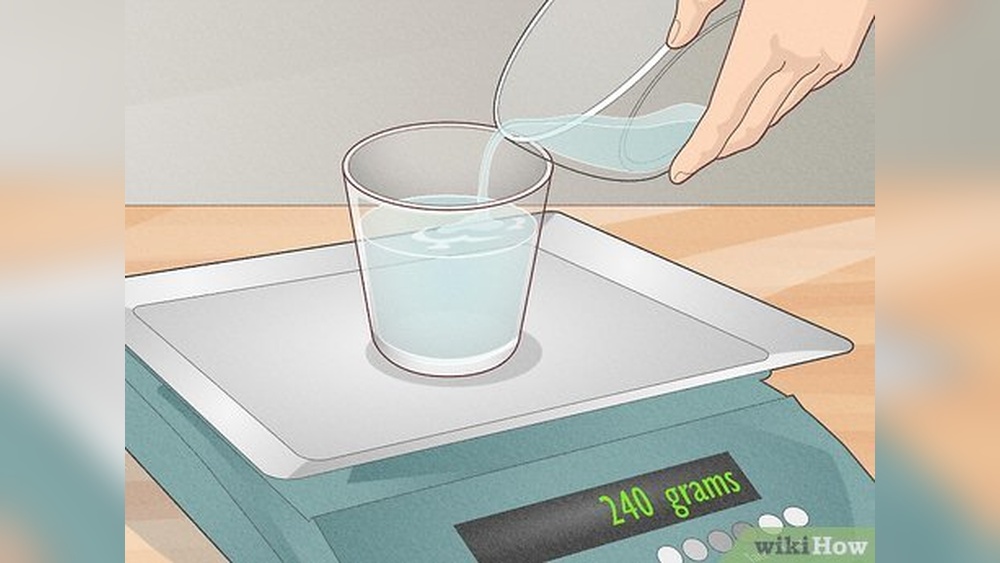
A digital kitchen scale can measure liquid by weight. Water is simple: 1 ml weighs 1 gram. For other liquids, check density.
- 100 ml water = 100 grams
Non-obvious insight: Oil is lighter than water, so 100 ml oil = about 90 grams.
Syringes
Medical syringes (without needles) are precise for small amounts. Pharmacies sell them in sizes from 1 ml to 100 ml.
- Fill syringe, check marks, and squeeze out the exact amount.
Eye Droppers And Pipettes
For tiny amounts, eye droppers or pipettes are perfect. Each has marks for milliliters.
Practical tip: Clean pipettes after each use to avoid mixing flavors.
Kitchen Ladles
A standard ladle holds about 60 ml (¼ cup). You can use a ladle for soups and stocks.
- 4 ladles = 1 cup (approximate)
Friendly mentor advice: Ladles are not exact, but good for recipes where precision is less critical.
Measuring Using Food Packaging
Many foods come in packages with printed volume. This helps you estimate liquid when you don’t have tools.
Yogurt, Cream, And Milk Containers
- Small yogurt cups: 125 ml
- Milk carton (small): 250 ml
- Cream packs: 200 ml
Calm expert tip: Use the empty container to measure other liquids.
Soda And Juice Bottles
- Small soda can: 330 ml
- Juice box: 200 ml
Pour liquid into these containers to measure.
Tetra Packs
Tetra packs for juice and milk often have volume printed. Use them as a measuring tool.
Experience-based guide: Rinse before use to avoid mixing flavors.
Estimating Liquid With Body Parts
Sometimes, you have nothing but your hands. Body parts can help estimate liquid in emergencies.
Thumb Joint
The first joint of your thumb holds about 1 teaspoon.
Closed Fist
A closed fist can hold about 100 ml of liquid.
Straight-to-the-point helper: This is not exact, but useful if you have no tools at all.
Measuring Liquid Using Mathematical Tricks
If you know the size of a container, you can use math to calculate volume.
Calculate Cylinder Volume
Most glasses and mugs are cylinders. Measure height and diameter.
Volume = Π × (radius²) × Height
Example:
- Diameter: 8 cm
- Height: 10 cm
- Radius: 4 cm
Volume = 3. 14 × (4 × 4) × 10 = 3. 14 × 16 × 10 = 502. 4 cm³ (about 502 ml)
Using Rectangular Containers
Volume = Length × Width × Height
Example:
- Length: 10 cm
- Width: 5 cm
- Height: 10 cm
Volume = 10 × 5 × 10 = 500 cm³ = 500 ml
Practical advisor insight: Use a ruler and calculator for best results.
Common Measurement Conversions
Knowing how different units relate helps you measure liquid easily.
- 1 cup = 240 ml
- ½ cup = 120 ml
- ¼ cup = 60 ml
- 1 tablespoon = 15 ml
- 1 teaspoon = 5 ml
- 1 liter = 1000 ml
These numbers are useful when using substitute items.
Comparison Of Common Household Items
Here is a comparison of typical items and their average volumes:
| Item | Volume (ml) | Equivalent in Cups |
|---|---|---|
| Standard Mug | 250 | 1 cup |
| Small Glass | 200 | 0.8 cup |
| Large Glass | 300 | 1.25 cup |
| Water Bottle (Half) | 250 | 1 cup |
| Ladle | 60 | 0.25 cup |
| Yogurt Cup | 125 | 0.5 cup |
Practical Examples
Making Pancakes Without A Measuring Cup
Suppose your recipe calls for 1 cup of milk and ½ cup of water. Use a standard mug for the milk (fill to the top) and a small glass for the water (fill halfway).
Preparing Soup
If you need 2 cups of broth, use 8 ladles (since 1 ladle ≈ ¼ cup).
Baking Bread
If you need 1 tablespoon of oil, use the first joint of your thumb or a regular spoon.
Mixing Salad Dressing
If you need 3 tablespoons of vinegar, use three full spoons from the same set.
Tips For Measuring Liquid Accurately Without A Cup
- Always use the same item for all measurements in a recipe.
- Double-check volumes using water and a known container.
- Mark levels on containers for future use.
- Practice estimating amounts for common items.
- Clean containers before measuring to avoid mixing flavors.
Hidden insight: Estimation improves with practice. Keep notes on your results to adjust next time.
Mistakes To Avoid
- Using different cups or glasses for each ingredient.
- Ignoring the shape of containers (wide vs. narrow).
- Forgetting to rinse containers before use.
- Overfilling or underfilling mugs or glasses.
- Not checking the volume of packaged items.
Friendly mentor tip: Consistency is key. If you always use the same mug, your results will improve.
Advanced Techniques For Accurate Measurement
Marking Containers
Use a marker or tape to mark 1 cup, ½ cup, and ¼ cup levels on mugs or bottles. This lets you measure quickly every time.
Creating A Reference Chart
Write down the volumes for your common items and keep the list in the kitchen.
Using Digital Tools
Smartphone apps can help convert measurements and offer guidance.
Comparing With Standard Measurements
If you have access to a measuring cup, measure your mugs and glasses once. Keep these numbers for future use.
Comparison: Estimation Vs. Precision
Many cooks use estimation every day. But when does precision matter?
| Situation | Estimation | Precision |
|---|---|---|
| Making Soup | Works fine | Not critical |
| Baking Cake | Risky | Important |
| Mixing Drinks | Acceptable | Better for taste |
| Fermentation | Not recommended | Essential |
Calm expert advice: Use estimation for flexible recipes. Use precision for baking, fermentation, or scientific cooking.
When To Use Estimation And When To Find A Measuring Cup
Estimation is great for:
- Soups
- Stews
- Sauces
- Drinks
Find a measuring cup or scale for:
- Baking (cakes, bread)
- Canning/preserving
- Recipes with delicate flavors
Straight-to-the-point helper: If the recipe says “exactly,” use precise tools.
Safety And Hygiene Tips
- Clean items before measuring.
- Do not use containers that held chemicals.
- Avoid using containers with cracks or chips.
- Wash hands before estimating with body parts.
Practical advisor note: Safety is as important as accuracy.

Credit: www.youtube.com
Non-obvious Ways To Improve Your Estimation Skills
- Practice with water and known containers when you have free time.
- Use sticky notes or labels to mark levels.
- Teach children or family members to estimate for fun and learning.
- Watch videos or tutorials from professional chefs.
Hidden benefit: Improving estimation skills can make you more flexible in the kitchen and reduce dependence on tools.
Understanding Cultural Variations
Different cultures use unique ways to measure liquids. In some Asian countries, bowls are standard. In Europe, mugs and glasses are common. The US relies on cups and spoons.
Experience-based guide: If you travel or use international recipes, check the local standard for measurements.
Real Data: Accuracy Of Common Substitutes
Studies show that using mugs or glasses is accurate within 10–15% for most recipes. For baking, error rates can lead to failed cakes or bread. For soups and stews, errors are less critical.
| Item | Average Error (%) | Best Use |
|---|---|---|
| Mug | 12 | Drinks/Soups |
| Glass | 10 | Water/Juice |
| Spoon | 5 | Small amounts |
| Ladle | 15 | Broth/Stock |
Internal And External Resources
If you want to learn more about liquid measurement, check out our guide on kitchen conversions (internal link if available). For more detailed science on measurement accuracy, see Food Network.

Credit: www.wikihow.com
Frequently Asked Questions
What Can I Use Instead Of A Measuring Cup For Liquid?
You can use drinking glasses, mugs, water bottles, spoons, ladles, or even food packaging like yogurt cups or juice boxes. Always check the volume of these items before using.
How Accurate Are Household Items For Measuring Liquid?
Accuracy varies. Mugs and glasses are usually within 10–15% of standard measurements. Spoons are more precise. For baking or scientific recipes, try to use exact tools.
Can I Use A Kitchen Scale To Measure Liquid?
Yes. One milliliter of water weighs one gram, so a digital kitchen scale can help measure water and many other liquids. For oils or syrups, check their density to convert grams to milliliters.
How Can I Measure Liquid For Baking Without A Cup?
Use measuring spoons, digital scales, or mark a mug for standard amounts. For best results, measure your mug once with water and keep a note of its capacity.
Are Estimation Methods Safe For All Recipes?
Estimation is safe for soups, stews, drinks, and sauces. It is not recommended for baking, fermenting, or recipes needing precise amounts. When in doubt, use exact tools.
Measuring liquid without a measuring cup is not only possible, but it can also become a useful skill. With practice, you’ll feel confident in the kitchen, adapt to any situation, and follow recipes easily. By using household items, visual tricks, and simple math, you can achieve reliable results.
Remember, estimation works well for flexible recipes, but precision is vital for baking and preserving. Keep notes on your favorite substitutes, mark your containers, and improve your skills over time. Your kitchen will become more adaptable, and cooking will be less stressful.