Is 3/4 Bigger Than 1/2 On A Measuring Cup
If you’ve ever followed a recipe, you know how important accurate measurements are. Many people wonder: is 3/4 bigger than 1/2 on a measuring cup? This question comes up often, especially for beginner cooks and bakers. A small mistake in measurement can change the taste and texture of your food. Understanding fractions on measuring cups is important not only for cooking but also for building your confidence in the kitchen.
Let’s break down this question step by step. We’ll look at what fractions mean, how measuring cups show them, how to compare 3/4 and 1/2, and why it matters. By the end of this article, you’ll have a clear answer, plus practical tips and examples so you never get confused about measuring cup fractions again.
Understanding Fractions On Measuring Cups
Most measuring cups come with fraction markings like 1/4, 1/3, 1/2, 2/3, 3/4, and 1 (full cup). These fractions help you measure liquids or dry ingredients more precisely. But what do these numbers really mean?
A fraction shows a part of a whole. For example, 1/2 means “one out of two equal parts,” while 3/4 means “three out of four equal parts.” If you fill a measuring cup to the 1/2 line, you have half a cup. If you fill it to the 3/4 line, you have three-quarters of a cup. It’s easy to see the lines and numbers, but comparing them can sometimes be confusing, especially when you’re in a hurry.
Why Do Measuring Cups Use Fractions?
Recipes are written for many people, so using fractions is the easiest way to divide or multiply ingredients. Not every ingredient is used in full cups. Fractions like 1/2 and 3/4 allow for more flexibility. For example, you might need 3/4 cup of milk for pancakes or 1/2 cup of sugar for cookies. Measuring cups make it simple to get the amount the recipe calls for.
Common Fraction Sizes On Measuring Cups
Most standard U.S. measuring cup sets include these sizes:
- 1 cup (full cup)
- 3/4 cup
- 2/3 cup
- 1/2 cup
- 1/3 cup
- 1/4 cup
These sizes cover most recipe needs. Some cups even add lines for other measurements, like 1/8 cup or metric units (milliliters), but the above list is the most common.
The Meaning Of 3/4 And 1/2 In Everyday Cooking
To understand if 3/4 is bigger than 1/2, let’s look at what each fraction means on its own.
What Is 1/2 On A Measuring Cup?
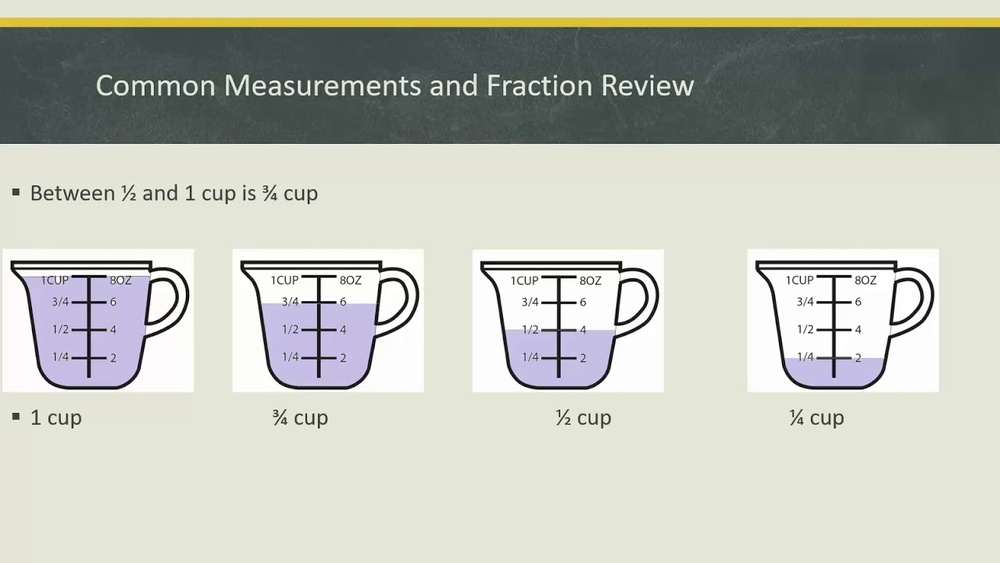
The 1/2 cup mark means you have filled the cup halfway to the top. If the full cup holds 240 milliliters (ml), 1/2 cup equals 120 ml. This is a very common measurement in baking and cooking. You’ll find 1/2 cup used for ingredients like oil, sugar, flour, or water.
What Is 3/4 On A Measuring Cup?
The 3/4 cup mark means you have filled the cup three-quarters of the way. In other words, you have three out of four equal parts of a full cup. If a full cup is 240 ml, 3/4 cup equals 180 ml. This measurement is also common for things like milk, shredded cheese, or chopped vegetables.
Comparing The Two
To see which is bigger, think of splitting a cake. If you cut a cake in half, each person gets 1/2. If you cut it into four pieces and take three, you have 3/4. Three pieces out of four are more than one piece out of two.
Here’s a simple visual to help:
- 1/2 cup = 2/4 cup
- 3/4 cup = 3/4 cup
So, 3/4 is clearly larger than 1/2.
Comparing 3/4 And 1/2: Simple Math And Visuals
Many people find fractions confusing, but there’s an easy way to compare them. Let’s use basic math and some kitchen examples.
Making Denominators The Same
To compare fractions, make the bottom number (denominator) the same. 1/2 is the same as 2/4. Now compare 2/4 and 3/4. Which is bigger? 3/4 is larger than 2/4.
Example:
- 1/2 = 2/4
- 3/4 = 3/4
So, 3/4 is bigger than 1/2.
Visual Guide
Imagine a measuring cup filled to 1/2 and another filled to 3/4. The 3/4 cup will always have more.
Here’s a simple comparison chart:
| Fraction | Equivalent in 1/4 Cups | Milliliters (ml) |
|---|---|---|
| 1/2 | 2/4 | 120 ml |
| 3/4 | 3/4 | 180 ml |
As you can see, the 3/4 cup has more volume.
Everyday Kitchen Example
Let’s say you are making pancakes. The recipe calls for 3/4 cup of milk, but you only use 1/2 cup. Your pancakes will be drier and might not cook the way you expect. Using less than the recipe says can affect texture and taste.
How Measuring Cups Show 3/4 And 1/2
Measuring cups are usually made of plastic, glass, or metal. Each one has clear lines with fraction labels. The line for 1/2 is always lower than the one for 3/4. This is because 1/2 is less than 3/4.
Where To Find The Markings
Look at your measuring cup. You’ll see lines for 1/4, 1/2, 3/4, and 1 cup. The higher the line, the more the cup holds.
Reading The Cup Correctly
- Place the cup on a flat surface.
- Pour the ingredient until the liquid (or dry ingredient, if using a dry cup) reaches the line marked 1/2 or 3/4.
- Check at eye level for accuracy.
Many beginners make the mistake of tilting the cup or looking from above, which can give a wrong reading.

Credit: www.amazon.ca
Why It Matters: Baking, Cooking, And Recipe Results
A small mistake in measuring can change your results. Let’s see why using the right fraction matters:
Baking Needs Precision
Baking is science. If you use 1/2 cup of flour instead of 3/4, your cake may not rise or may turn out dense. Using more liquid than needed can make your dough sticky.
Cooking Is More Flexible, But Still Matters
In cooking, you can sometimes adjust as you go, but starting with the right measurement helps. For example, too little milk in mashed potatoes makes them dry.
Example: Chocolate Chip Cookies
Imagine a recipe needs 3/4 cup of sugar. If you only use 1/2 cup, your cookies will be less sweet and might not spread correctly.
Data: Common Recipe Outcomes
| Ingredient | Amount Needed | If You Use 1/2 Cup | If You Use 3/4 Cup |
|---|---|---|---|
| Sugar | 3/4 cup | Less sweet, drier cookies | Correct sweetness, chewy texture |
| Milk | 3/4 cup | Dry pancakes | Fluffy pancakes |
| Flour | 3/4 cup | Wet, sticky dough | Correct dough texture |
As shown, using the correct measurement is key to good results.
Four Key Items Explained: 3/4, 1/2, Measuring Cup, And The Comparison
The topic highlights four important items. Let’s look at each one in detail.
1. 3/4 As A Fraction
The fraction 3/4 means three parts out of four equal parts. In the kitchen, this is used when you need more than half but less than a full cup. It’s common in recipes for things like:
- 3/4 cup of milk for pancakes
- 3/4 cup of shredded cheese for casseroles
- 3/4 cup of nuts for brownies
Non-obvious insight: Many measuring cup sets do not include a 3/4 cup. If yours doesn’t, you can use a 1/4 cup three times to make 3/4 cup.
Practical Tip
If you only have a 1/4 cup, fill and pour it three times to reach 3/4 cup. This helps avoid guessing or under-measuring.
2. 1/2 As A Fraction
The fraction 1/2 is one of the most common in recipes. It means you need half the amount of a full cup. Examples include:
- 1/2 cup of oil for muffins
- 1/2 cup of rice for two servings
- 1/2 cup of chopped onions for soups
Non-obvious insight: Sometimes, recipes call for 1/2 cup plus 2 tablespoons. Knowing that 1/2 cup is 8 tablespoons can help you measure odd amounts.
Practical Tip
If you do not have a 1/2 cup, use two 1/4 cups. This is a good backup when you are missing a measuring cup.
3. The Measuring Cup
The measuring cup is a simple but powerful kitchen tool. It helps you get the exact amount of ingredient you need. There are two types:
- Dry measuring cups: Usually come in sets. Each cup is filled to the top and leveled with a knife.
- Liquid measuring cups: Usually clear, with a spout. Fill to the line and check at eye level.
Internal Link Opportunity
If you want to learn more about how to measure ingredients correctly, check our guide on [how to use measuring cups for baking](https://yourwebsite.com/how-to-use-measuring-cups-for-baking).
Measuring Cup Sizes And Conversions
Most measuring cups are based on the U. S. cup, which is 240 ml. In some countries, a cup might be 250 ml. Always check your measuring cup to make sure.
4. Comparing 3/4 And 1/2: Which Is Bigger?
Now, the main question: is 3/4 bigger than 1/2 on a measuring cup? Yes, it is.
Reason: 3/4 is three parts out of four. 1/2 is two parts out of four. Three is more than two, so 3/4 is larger.
Data Table: Fraction Comparison
| Fraction | Decimal Value | Milliliters (ml) | Tablespoons (U.S.) |
|---|---|---|---|
| 1/2 | 0.5 | 120 | 8 |
| 3/4 | 0.75 | 180 | 12 |
Practical Example: If you fill your measuring cup to the 3/4 line, you have more than if you fill it to the 1/2 line. This is true for both liquids and dry ingredients.

Credit: www.youtube.com
How To Measure 3/4 And 1/2 If You Don’t Have The Right Cup
Sometimes you might not have the exact measuring cup you need. Here’s how you can still measure accurately.
Measuring 3/4 Without A 3/4 Cup
- Use a 1/4 cup three times.
- Use a 1/2 cup, then add a 1/4 cup.
Measuring 1/2 Without A 1/2 Cup
- Use two 1/4 cups.
- Use 8 tablespoons (since 1 tablespoon is about 15 ml).
Tips For Accurate Measuring
- Level off dry ingredients with a flat edge.
- Check liquid measurements at eye level.
- Use the right type of measuring cup for the ingredient.
Common Mistakes With Measuring Cup Fractions
Even experienced cooks make mistakes. Here are some common ones and how to avoid them.
1. Misreading The Lines
Some people fill to the wrong line, especially if the markings are worn off. Always double-check before pouring.
2. Using The Wrong Cup
Dry and liquid measuring cups are not the same. Using the wrong one can change the amount you measure.
3. Not Leveling Dry Ingredients
If you scoop flour and don’t level it, you might have too much or too little. This affects your recipe.
4. Guessing Instead Of Measuring
Some people try to “eyeball” the amount. This leads to mistakes, especially with baking.
5. Mixing Up Fractions
It’s easy to confuse 1/2 with 2/3 or 3/4. Take your time and check the fraction before using it.
Why Fraction Sizes Matter In Cooking And Baking
Fractions aren’t just math—they’re the secret to good food.
Baking Needs Precision
Baking is about chemical reactions. Even a small error can make a cake fall or cookies spread too much.
Cooking Is Forgiving, But Details Matter
You can adjust seasonings in a stew, but too little or too much of a main ingredient can change the dish.
Health And Nutrition
Accurate measuring helps with portion control and nutrition. If you’re watching calories or specific nutrients, every fraction counts.
Measuring Cups Around The World
The U. S. cup is 240 ml, but not every country uses the same size.
- Australia: 250 ml per cup
- UK: Often uses milliliters or fluid ounces
Always check your measuring cup for the country’s standard.
Metric Vs. Imperial
Some recipes use milliliters or grams. If you’re using a U. S. recipe in another country, convert the measurements. Many measuring cups include both metric and U. S. units for convenience.

Credit: www.amazon.ca
Fun Facts About Measuring Cups And Fractions
- The first measuring cups were patented by Fannie Farmer in the late 1800s.
- Most U.S. measuring cups are made to hold a little extra, so you don’t spill.
- Some fancy measuring cups are magnetic or collapsible for easy storage.
Real-world Scenarios: Why Understanding 3/4 Vs 1/2 Helps
Baking For A Crowd
If you double a recipe, you need to know how to multiply fractions. For example, doubling 3/4 cup means you need 1 and 1/2 cups.
Adjusting Recipes
If you only have half the ingredients, you need to halve fractions. Half of 3/4 is 3/8. Knowing this helps you scale recipes up or down.
Diet And Meal Prep
If you’re counting calories, knowing exactly how much you’re eating is important. A little extra can add up over time.
Practical Exercises: Test Your Knowledge
Try these quick exercises at home:
- Fill a measuring cup to 1/2. Pour it into a bowl. Now fill to 3/4 and pour into a different bowl. Compare the two.
- Measure 3/4 cup using a 1/4 cup three times. Is it the same as the 3/4 line on your cup?
- Try using tablespoons to measure 1/2 cup (8 tablespoons). Then measure 3/4 cup (12 tablespoons). See the difference.
Expert Tips For Measuring Cup Success
- Always use the right measuring tool for the ingredient.
- Replace worn-out cups with clear markings.
- Practice converting fractions (like 1/2 to 2/4, or 3/4 to 6/8) to build confidence.
- For sticky ingredients (honey, syrup), spray the cup with a little oil so it comes out easily.
- When baking, measure dry ingredients first, then liquids, to avoid sticking.
When Fractions Get Tricky: Doubling And Halving
Sometimes recipes ask you to double or halve ingredients.
Doubling
- Double 1/2 cup: 1 cup
- Double 3/4 cup: 1 and 1/2 cups
Halving
- Half of 1/2 cup: 1/4 cup
- Half of 3/4 cup: 3/8 cup (which is 6 tablespoons)
Many people get stuck here. Use a calculator or write it down if you’re not sure.
Recommended Measuring Cup Brands
If you’re looking to buy a new set, here are some popular brands:
- OXO Good Grips: Durable, clear markings.
- Pyrex: Glass, safe for liquids and microwave.
- KitchenAid: Colorful, easy to use.
- Cuisipro: Magnetic, sticks together for storage.
Check reviews and choose a set that has all the sizes you need.
For more about kitchen tools and best practices, see Epicurious.
Frequently Asked Questions
What Is The Difference Between 1/2 And 3/4 On A Measuring Cup?
The difference is the amount. 3/4 is more than 1/2. If you fill a measuring cup to 1/2, it will have less than if you fill to 3/4. This matters for recipe accuracy.
Can I Use Two 1/4 Cups To Make 1/2 Cup?
Yes. Two 1/4 cups equal 1/2 cup. This is useful if you are missing a 1/2 cup measure.
How Many Tablespoons Are In 1/2 Cup And 3/4 Cup?
1/2 cup is 8 tablespoons. 3/4 cup is 12 tablespoons. Knowing this helps when you need to measure small amounts.
What If My Measuring Cup Does Not Have A 3/4 Mark?
Use a 1/4 cup three times, or a 1/2 cup plus a 1/4 cup. Both give you 3/4 cup.
Are Dry And Liquid Measuring Cups The Same?
No. Dry cups are meant to be filled to the top and leveled. Liquid cups are clear, with space at the top to prevent spills. Use the correct cup for the ingredient.
When you understand the difference between 3/4 and 1/2 on a measuring cup, you make better food, waste less, and feel more confident in the kitchen. Measuring accurately is a small step that makes a big difference. Next time you see a recipe, you’ll know exactly what to do and why it matters.