Pour Over Coffee Maker Vs French Press: Complete Comparison for Coffee Lovers
Coffee is more than just a morning drink for many people—it’s an experience. The way you make your coffee can change the taste, the aroma, and even your daily routine. Two of the most loved manual brewing methods are the pour over coffee maker and the French press. Both have dedicated fans and unique qualities. But which one is right for you? This guide explains everything about pour over and French press, from how they work to which makes better coffee, and which suits your lifestyle best.
If you want the perfect cup at home, understanding the differences between these two methods is essential. Whether you’re a beginner or a coffee enthusiast, you’ll find clear answers and practical tips here. Let’s dive deep into the world of pour over vs French press and help you make the best choice.
What Is A Pour Over Coffee Maker?
A pour over coffee maker is a simple device that brews coffee by letting hot water flow through ground coffee and a filter, usually made of paper or metal. The water slowly drips into a carafe or mug below. The most popular types are the Chemex, Hario V60, and Kalita Wave.
The process is hands-on. You heat water separately, place coffee grounds in the filter, and pour the water in a slow, circular motion. This allows you to control the flow and extraction, leading to a clean and bright cup.
Key Features
- Manual control: You control water temperature, pouring speed, and brew time.
- Uses filters: Most use paper or metal filters to separate grounds from liquid.
- Clean taste: The filter removes oils and fine particles, producing a clear cup.
How It Works
- Place a filter in the brewer and rinse it to remove paper taste.
- Add medium-fine coffee grounds.
- Slowly pour hot water (around 90-96°C or 195-205°F) in circles over the grounds.
- Wait as the coffee drips into the carafe or mug.
- Remove the filter and serve.
Popular Pour Over Devices
- Chemex: Known for its hourglass shape and thick paper filters.
- Hario V60: Cone-shaped with spiral ridges for even extraction.
- Kalita Wave: Flat-bottomed for a more forgiving brew.
Who Loves Pour Over?
Pour over coffee is ideal for people who enjoy experimenting, want control over each variable, and appreciate a light, clean, and nuanced cup of coffee.
What Is A French Press?
The French press, also called a press pot or plunger pot, is another classic way to make coffee. It’s a glass or stainless steel pot with a plunger and a metal mesh filter. You add ground coffee and hot water, let it steep, then press the plunger down to separate the grounds from the coffee.
This method is direct and easy to learn. It produces a rich, full-bodied cup because the metal filter lets more oils and fine particles through.
Key Features
- Full immersion: Coffee grounds steep in water for several minutes.
- No paper filter: Uses a metal mesh filter, so more oils stay in the cup.
- Rich texture: The result is bold, heavy, and sometimes a bit gritty.
How It Works
- Add coarse coffee grounds to the French press.
- Pour in hot water (around 93-96°C or 200-205°F).
- Stir gently and put the lid on with the plunger up.
- Let it steep for 4 minutes (some prefer longer for stronger taste).
- Slowly press the plunger down to separate grounds.
- Pour and enjoy.
Popular French Press Brands
- Bodum: Famous for affordable glass and stainless steel presses.
- Espro: Known for double micro-filters for a cleaner cup.
- Frieling: Premium stainless steel option.
Who Loves French Press?
French press is great for those who love strong, bold coffee and want a simple brewing method with minimal equipment.
Pour Over Vs French Press: Main Differences
Understanding the key differences helps you choose the right method for your needs. Let’s break down the most important factors.
| Factor | Pour Over | French Press |
|---|---|---|
| Brewing Method | Drip filtration | Full immersion |
| Filter Type | Paper/metal | Metal mesh |
| Coffee Texture | Clean, crisp | Rich, heavy, sometimes gritty |
| Control Over Variables | High (pour, temperature, timing) | Medium (steep time, grind size) |
| Brew Time | 3-5 minutes | 4-6 minutes |
| Ease of Use | Requires practice | Easy, beginner-friendly |
| Cleaning | Easy, dispose filter | Can be messy |
| Serving Size | 1-2 cups typical | Up to 8 cups |
Flavor Profile: What Can You Expect?
The taste and mouthfeel are the biggest reasons people pick one method over the other.
Pour Over Taste
- Bright and clean: Paper filters remove oils and micro-grounds, highlighting delicate notes.
- Subtle flavors: Great for single origin, light to medium roast beans.
- No sediment: The cup is smooth and clear.
French Press Taste
- Full-bodied: Metal filter lets oils and fine particles pass through.
- Bold and rich: Works well with dark roasts and blends.
- Possible grit: Some fine grounds remain, giving a heavier texture.
Example: If you brew an Ethiopian Yirgacheffe, pour over brings out floral and citrus notes. French press will highlight sweetness and body but may mute the bright acidity.
Brewing Process: Step-by-step
Both methods are easy, but each has unique steps and tips for best results.
Pour Over Brewing Steps
- Weigh coffee: Use 15-18g for one cup (250ml water).
- Grind: Medium-fine, like table salt.
- Rinse filter: Removes paper taste and warms vessel.
- Add coffee grounds: Level out for even extraction.
- Pour water: Start with a “bloom” (pour a small amount to release gas), wait 30 seconds.
- Continue pouring: In slow circles, keep water level steady.
- Total brew time: 3-4 minutes.
French Press Brewing Steps
- Weigh coffee: 18-20g for one cup (250ml water).
- Grind: Coarse, like breadcrumbs.
- Add grounds to pot: Pour hot water.
- Stir: Make sure all grounds are wet.
- Steep: 4 minutes for standard strength.
- Plunge: Press down slowly.
- Serve: Pour immediately to avoid over-extraction.
Pro Tips
- For pour over, water temperature and pouring style matter more. Try a gooseneck kettle for accuracy.
- For French press, don’t leave coffee sitting with the grounds after pressing—this makes it bitter.
Coffee Grind Size: Why It Matters
The grind size affects extraction and flavor.
- Pour Over: Needs a medium-fine grind. Too fine = bitter and slow. Too coarse = weak and sour.
- French Press: Needs a coarse grind. Too fine = muddy, hard to press. Too coarse = watery.
Grinding fresh before brewing is always best. Pre-ground coffee loses aroma and can be the wrong size for your method.
Coffee-to-water Ratio: Getting It Right
Coffee strength depends on how much coffee you use for each cup.
- Pour Over: 1:16 ratio (1g coffee per 16g water) is common.
- French Press: Slightly higher, about 1:14 or 1:15 ratio.
Experiment to find your perfect taste. Too little coffee makes it weak; too much makes it harsh.
Which Is Easier To Use?
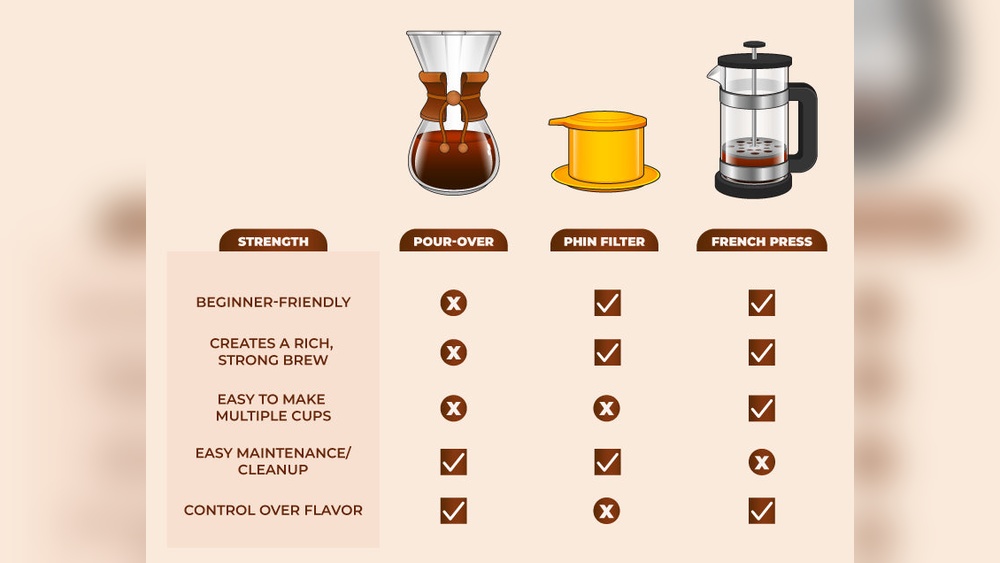
French press is often seen as simpler for beginners. You just add coffee, water, wait, and press. You don’t need special pouring skills or equipment.
Pour over gives more control but needs practice. Pouring slowly and evenly takes some learning. Still, many find the ritual enjoyable.
If you want “set it and forget it,” French press is easier. If you like hands-on brewing, pour over is rewarding.

Credit: www.homegrounds.co
Cleaning And Maintenance
Cleaning affects how often you want to use your coffee maker.
Pour Over
- Easy cleanup: Throw away paper filter with grounds.
- Device rinse: Quick wash with water.
- No small parts: Most have simple shapes.
French Press
- More steps: Grounds stick to the mesh and bottom.
- Disassemble filter: Needs careful cleaning to avoid old coffee residue.
- Tip: Use a spatula to scoop grounds, and rinse mesh thoroughly.
A clean brewer gives better tasting coffee. Old oils and grounds can make coffee taste stale.
Cost Comparison: Which Is Cheaper?
Both methods are affordable, but there are hidden costs.
| Item | Pour Over | French Press |
|---|---|---|
| Initial Device Cost | $15–$50 (V60), $40–$60 (Chemex) | $15–$100 (glass, stainless steel) |
| Filters | Ongoing cost (paper or metal) | No extra cost |
| Grinder Needed | Yes, for best results | Yes, for best results |
| Total Cost Over 1 Year | ~$30–$90 (including filters) | ~$20–$110 |
Insight: The French press may save money long-term since there are no recurring filter costs. However, pour over filters are not expensive, and reusable metal filters are available.
Environmental Impact
Some coffee lovers care about waste and sustainability.
- Pour Over: Paper filters create extra waste, but they are often compostable. Metal filters are reusable.
- French Press: No disposable filters, just the coffee grounds. Less daily waste.
If you want a “zero waste” brew, French press or a metal pour over filter is best.
Health Differences
Coffee brewing affects what ends up in your cup.
- Pour Over: Paper filters trap most cafestol, a compound that may raise cholesterol. Cleaner cup, less oil.
- French Press: Metal mesh lets cafestol pass through, leading to a richer cup but slightly higher cholesterol risk if you drink a lot daily.
For most people, moderate consumption from either method is safe. If you have cholesterol concerns, pour over is a better choice.
Which Method Is Faster?
Speed can matter on busy mornings.
- Pour Over: 3–4 minutes for one cup, plus setup.
- French Press: 4 minutes steeping, but you can make several cups at once.
If you need to serve several people fast, French press is more efficient. For one cup, both are similar in time.
Versatility And Batch Size
- Pour Over: Best for 1–2 cups. Making more at once is tricky.
- French Press: Can brew 4–8 cups in one go, great for guests or families.
If you often make coffee for a group, French press is easier.

Credit: www.youtube.com
Portability: Which Is Better For Travel?
- Pour Over: Lightweight, easy to pack. Needs separate kettle and filters.
- French Press: Bulkier, but some are designed for travel (insulated, unbreakable).
Camping? A plastic or metal French press is tough. For hotels, a small pour over cone fits in a bag.
Common Beginner Mistakes (and How To Avoid Them)
Pour Over Mistakes
- Pouring too fast: Leads to under-extracted, sour coffee.
- Wrong grind size: Too fine = clogging, too coarse = weak taste.
- Not rinsing filter: Gives papery taste.
French Press Mistakes
- Using fine grind: Makes pressing hard and the coffee muddy.
- Leaving coffee sitting: Over-extracts, becomes bitter.
- Not cleaning mesh: Old oils make coffee taste bad.
Non-obvious insight: With French press, stirring after pouring water helps even extraction. For pour over, blooming the grounds properly (waiting after first pour) can make a noticeable difference in flavor.
Which Method Is Right For You?
The choice depends on your taste, time, and how much you want to control the process.
Choose Pour Over If:
- You love clean, bright, and nuanced coffee.
- You want to explore different beans and subtle flavor notes.
- You enjoy a hands-on brewing ritual.
- You usually make 1–2 cups at a time.
Choose French Press If:
- You like bold, heavy, and rich coffee.
- You often brew for more than one person.
- You want a simple process with less attention needed.
- You prefer a cup with more body and texture.
Expert Opinions And Popularity
According to the Specialty Coffee Association, both methods can make excellent coffee, but they recommend matching the brew method to the bean type and your personal taste.
A 2021 survey by the National Coffee Association showed that about 15% of American home coffee drinkers use French press, while pour over methods are growing in popularity, especially among younger coffee lovers.
Baristas often use pour over to highlight specialty beans in cafes, while French press is the go-to for a comforting, robust cup at home.
Detailed Comparison Table
For a quick summary, here’s a side-by-side look at the most important features:
| Feature | Pour Over | French Press |
|---|---|---|
| Flavor Profile | Clean, bright, nuanced | Rich, bold, full-bodied |
| Best For | Single origin, light roasts | Blends, dark roasts |
| Brewing Control | High (pour, temp, timing) | Medium (steep, grind) |
| Batch Size | 1–2 cups | 1–8 cups |
| Cleanup | Easy, disposable filter | More involved, wash mesh |
| Travel Friendly | Very (lightweight) | Some models yes |
| Cost Over Time | Low to medium (filters) | Low (no filters) |
| Health Aspects | Less oil, lower cholesterol risk | More oil, slightly higher cholesterol risk |
Real-world Examples
- Busy parents: Many choose French press for its ability to brew several cups at once.
- Coffee explorers: Pour over fans often enjoy tasting the subtle differences between beans.
- Office use: Pour over is easy for solo coffee breaks, while French press is great for sharing.
Should You Own Both?
Some serious coffee lovers do! Each method brings out different qualities in beans. You might use pour over for a slow weekend morning and French press for busy weekdays. Owning both is not necessary, but it does give you options.
Non-obvious insight: Some people even use a French press for cold brew coffee, steeping grounds overnight in the fridge. Pour over, on the other hand, is almost always used for hot coffee.
Final Thoughts
Choosing between pour over and French press is really about knowing your taste and habits. Both can make excellent coffee with a little care. If you want a light, clear cup and enjoy the brewing process, pour over is your best friend.
If you want a strong, rich cup with less fuss and more capacity, French press is hard to beat.
Remember, the quality of your beans and water matter as much as the method. Try both if you can, and see which makes your morning better.
For more on coffee brewing science, check out the Wikipedia page on coffee preparation.

Credit: cafely.com
Frequently Asked Questions
What Grind Size Should I Use For Pour Over And French Press?
Use medium-fine grind for pour over (like table salt) and coarse grind for French press (like breadcrumbs). The right grind size prevents over-extraction and makes pressing or pouring easy.
Can I Use The Same Coffee Beans For Both Methods?
Yes, you can use the same beans, but the flavor will change. Pour over highlights bright and floral notes, while French press brings out richness and body. Adjust the grind and ratio for each method.
Which Method Has More Caffeine?
Caffeine levels depend on coffee-to-water ratio and brew time. French press usually has slightly more caffeine per cup, as more oils and fine particles stay in the drink. But differences are small if you use the same beans and amount.
Is It Okay To Use Pre-ground Coffee?
You can use pre-ground coffee, but freshly ground beans taste better and allow you to match the grind size to your method. Pre-ground coffee is often too fine for French press and may clog a pour over filter.
How Do I Avoid Bitterness In My Coffee?
Bitterness often comes from over-extraction (too fine grind, too long steeping, or too hot water). Use the correct grind size, water temperature (195-205°F), and brew time for each method. Always clean your equipment for the best taste.